
Advent is a time of expectation, anticipation, and waiting. What should we do while waiting? Here is a podcast I made last year during Advent.
A lay person who strives to follow the Rule of Saint Benedict, however imperfectly.
Advent is a time of expectation, anticipation, and waiting. What should we do while waiting? Here is a podcast I made last year during Advent.
In North Africa around the year 202 or 203, five catechumens were arrested. Among them was Perpetua, a young mother, and a slave named Felicitas, or Felicity. Along with three of their male companions, they were recent converts to Christianity who were preparing for baptism. Being a Christian was not a crime at that time, but not surrendering to the will of the governor was a crime, and he had ordered them to offer sacrifices to honor the emperor. Being Christians, they refused.
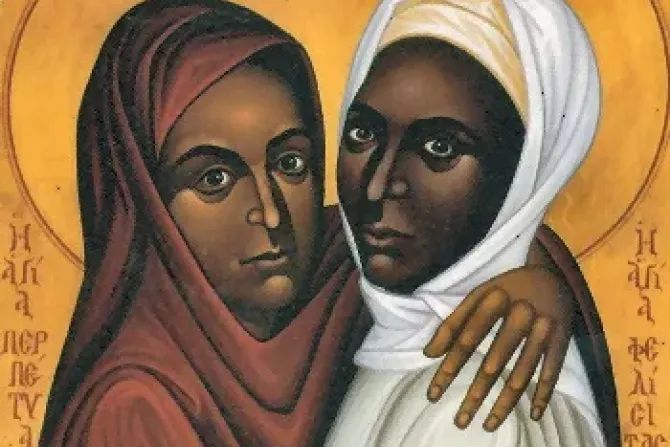
Perpetua kept a diary of her final days. So, unlike the stories we have of other saints, we have a firsthand account of their suffering and persecution. She wrote, “I was terrified, as I had never before been in such a dark hole. What a difficult time it was! With the crowd the heat was stifling; then there was the extortion of the soldiers; and to crown all, I was tortured with worry for my baby there.”
But members of the Christian community visited and ministered to them while they were in prison, and the five were baptized while in prison.
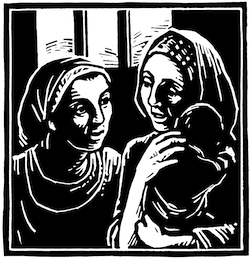
Felicity, the slave, was pregnant when put into prison, and according to local custom, a pregnant woman could not be put to death. However, Felicity couldn’t bear to be separated from the others as they faced their execution. While in jail, she went into labor and delivered a baby girl, who was then smuggled out of the prison to be raised by Felicity’s sister.
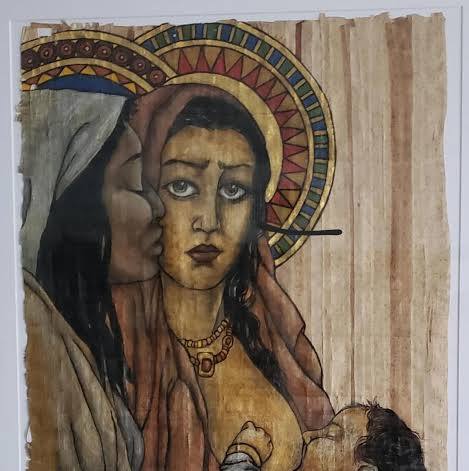
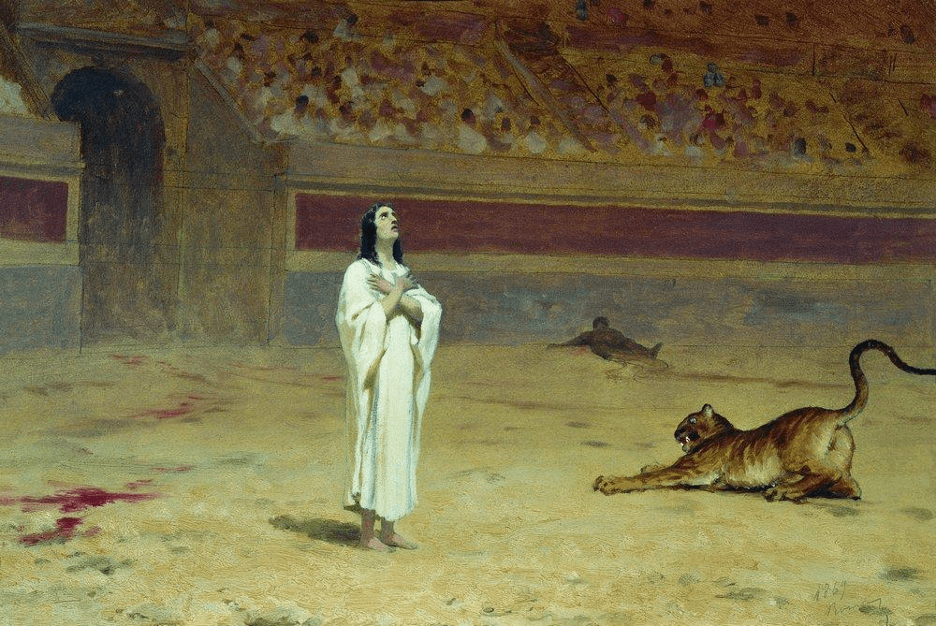
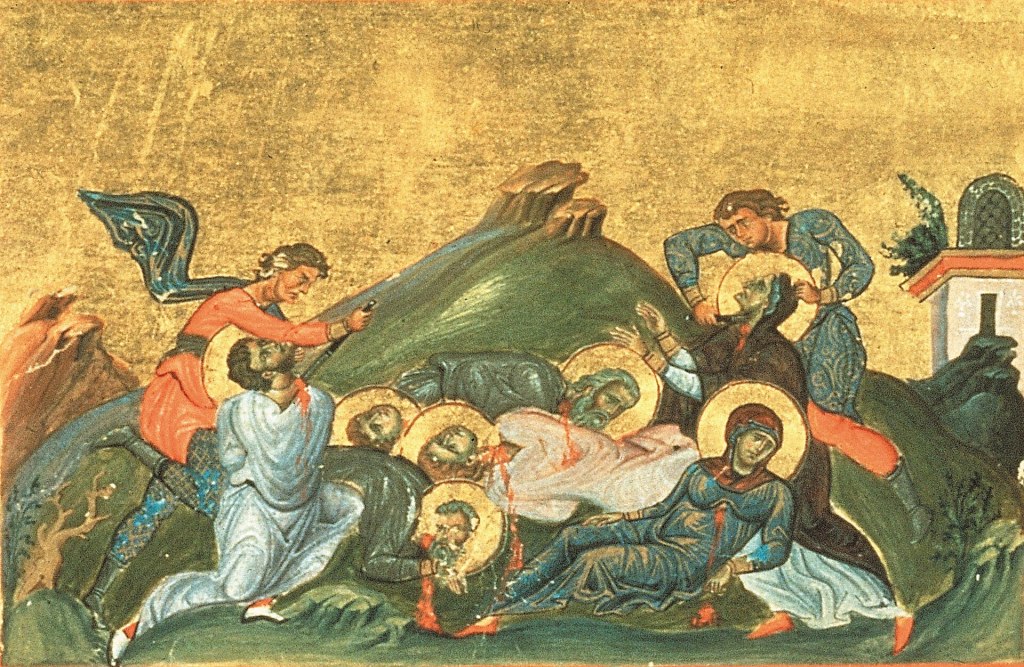
One of the male martyrs, Secundulus, died while in prison. The remaining four, receiving their sentence, were sent into the arena to face wild beasts—among them a leopard, a bear, a wild boar, and a wild heifer—as entertainment for the governor and his guests. In a series of encounters that must have frustrated the audience, the beasts failed to kill the catechumens and they finally died by the sword of the gladiators.
Before meeting her fate, Perpetua spoke to her brother and the fellow catechumens, saying: “You must all stand fast in the faith and love one another, and do not be weakened by what we have gone through.”
It might be easy, in what many may think of as our safe, ostensibly Christian nation, to think of martyrdom as something that happened in the past—under Roman rule in the days of the early church. But there have been modern-day martyrs as well. In May, 2014, The Times of London published an editorial entitled “Spectators at the Carnage.” It began with these words: “Across the globe, in the Middle East, Asia and Africa, Christians are being bullied, arrested, jailed, expelled and executed. Christianity is by most calculations the most persecuted religion of modern times.”
What should we do? First of all, we shouldn’t surrender to fear. In his second letter to Timothy, Paul exhorted, “God has not given us the spirit of fear, but of power, and love, and self-control.” Second, in humility, we might pray that, like Felicity and Perpetua, we too will give ourselves more fully and more whole-heartedly to God’s will for us. In his letter to the persecuted church in Rome, Paul exhorts them to “present your bodies as a living sacrifice, holy, and acceptable to God, which is your reasonable service of worship.”
Becoming self-sacrificial, for most of us, won’t likely lead to martyrdom, but it may lead to a role we haven’t yet played. In her book, The Time is Now, Joan Chittester challenges the reader to follow the prophets of old. That is, to refuse to accept a moral deterioration of the present and insist on heralding the coming of an unknown, but hopefully more righteous and just future. But Sister Joan also cautions that in all cases, prophets bear the punishment that comes from the systems whose dishonesty and human damage they expose, becoming “a living sacrifice.”
As Richard Rohr writes, the cross is a very dramatic image of what it means to be usable for God. Following Jesus is a vocation to share the fate of God for the life of the world and to suffer ever so slightly what God suffers. Mother Maria Skobtsova, an Eastern Orthodox monastic, wrote, “I am your message, God. Throw me like a blazing torch into the night, that all may see and understand.”
Collect
O God, who strengthened your servants Perpetua, Felicity, and their companions to make a good confession and encourage one another in the time of trial: Grant that we who cherish their blessed memory may be encouraged by their prayers to share their pure and steadfast faith and win with them the palm of victory; through Jesus Christ our Lord, who lives and reigns with you and the Holy Spirit, one God, for ever and ever. Amen.
From the Rule:
The ninth degree of humility is that a monk restrain his tongue and keep silence, not speaking until he is questioned. For the Scripture shows that “in much speaking there is no escape from sin” (Prov. 10:19) and that “the talkative man is not stable on the earth” (Ps. 140:11). (RSB 7, Part 13)

Proverbs 10:19
When words are many, transgression is not lacking, but the prudent are restrained in speech.
From Praying with Saint Benedict
Restraint of speech is one of the signature disciplines of Benedictines. We all have something to say and we want our voice to be heard. However, out of humility, we must suppress the impulse to always be heard.
Why? First, restraint of speech is essential to attentive listening. I have often caught myself in conversations not really listening to what others are saying because I am thinking about what I am anxiously waiting to say next. Although we may think about the point we want to make, we often don’t give serious thought to its appropriateness and what it adds to the discussion.


And then there are the thoughtless words, the things we wish we could take back after we’ve said them. The Proverb states, “When words are many, transgression is not lacking,” or as Benedict puts it, “In much speaking there is no escape from sin.”
Prayer
Patient and loving God, give me the humility to be a thoughtful listener, realizing that my own speech isn’t the most important voice in the room. Help me also to realize the damage that thoughtless words can do. Amen.
______________________________________________
S. Isaacson, Praying with Saint Benedict. (New York: Morehouse Publishing, 2021), 108-9.

Born in Hungary, Margaret of Wessex was the daughter of the English Prince Edward in exile and his wife Agatha. Margaret became the queen of Scotland from 1070 to 1093 as the wife of Malcom III. Chroniclers depicted her as a strong, pure Christian of noble character, who had great influence over her husband, the king, and instigated religious reform in the Church in Scotland.
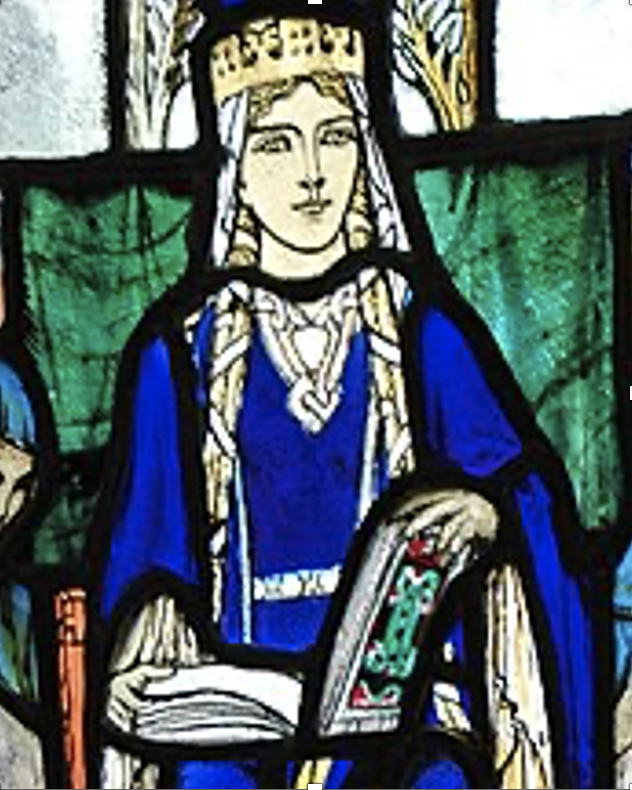
Queen Margaret also was known for her charitable works, serving orphans and the poor every day, before she herself ate, and washing the feet of the poor in imitation of Christ. She rose at midnight every night to attend the nighttime service of prayer. She invited the Benedictine Order to establish a monastery in Dunfermline, Fife, in 1072 and established ferries to assist pilgrims journeying across the Firth of Forth to St. Andrews, which claimed to possess bones of the saint.
She used a cave on the banks of the Tower Burn in Dunfermline as a place of devotion and prayer. Among her other deeds, Margaret also instigated the restoration of Iona Abbey in the Inner Hebrides Islands. She is also known to have interceded for the release of English exiles held in captivity during the Norman conquest of England, paying their ransoms and setting them free.

Margaret was as pious privately as she was publicly. She spent much of her time in prayer, devotional reading, and ecclesiastical embroidery. Her life is celebrated by the Church on November 16.

Prayer
O God, who called your servant Margaret to an earthly throne that she might advance your heavenly kingdom, and gave her zeal for your church and love for your people: Mercifully grant that we also may be fruitful in good works, and attain to the glorious crown of your saints; through Jesus Christ our Lord, who lives and reigns with you and the Holy Spirit, one God, for ever and ever. Amen.

From the Rule
Let the Abbot exercise the utmost care and concern for delinquent brethren, for “it is not the healthy but the sick who need a physician” (Matt 9:12) . . . He ought to use every means that a wise physician would use . . .
. . . Let him imitate the loving example of the Good Shepherd who left the ninety-nine sheep in the mountains and went to look for the one sheep that had gone astray, on whose weakness He had such compassion that He deigned to place it on His own sacred shoulders in order to carry it back to the flock (Luke 15:5).
Reflection
Sending someone away for the sake of the community does not mean that the one who is banished is gone from our hearts and our prayers. Love and, when needed, care follow that one as long as they are needed.
Easier said than done, right? Often, necessary discipline is accompanied by feelings of disappointment—if not anger and disgust—toward the offender. We don’t necessarily want to think about that person again or be reminded of the offenses that led to the decision for exclusion. Our response is good riddance.
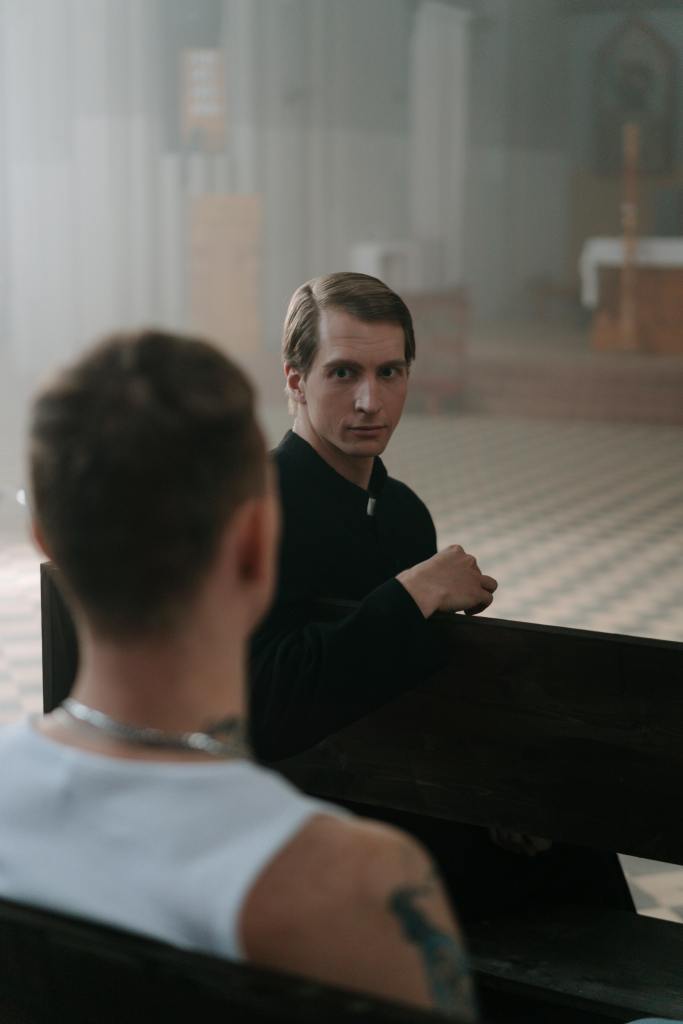
But this is not Jesus’s teaching or the guidance from Benedict. Jesus taught us to love our enemies. His examples of the prodigal son and parable of the good shepherd tell us to leave open the hope for repentance and return of the one who has grieved us.

Prayer
Merciful God, help me to love the sinner and welcome back the lost one. Amen.
Mike and I just spent three weeks in France. On the last Sunday of our vacation in France, my Cornerstone sister Judy took us to Taizé, an ecumenical monastic community in rural Burgundy, currently comprised of about 80 brothers: Catholic, Anglican, Protestant, and Orthodox men from about thirty countries around the world. The community was founded by Brother Roger Schutz in 1940 as a refuge from those escaping war.
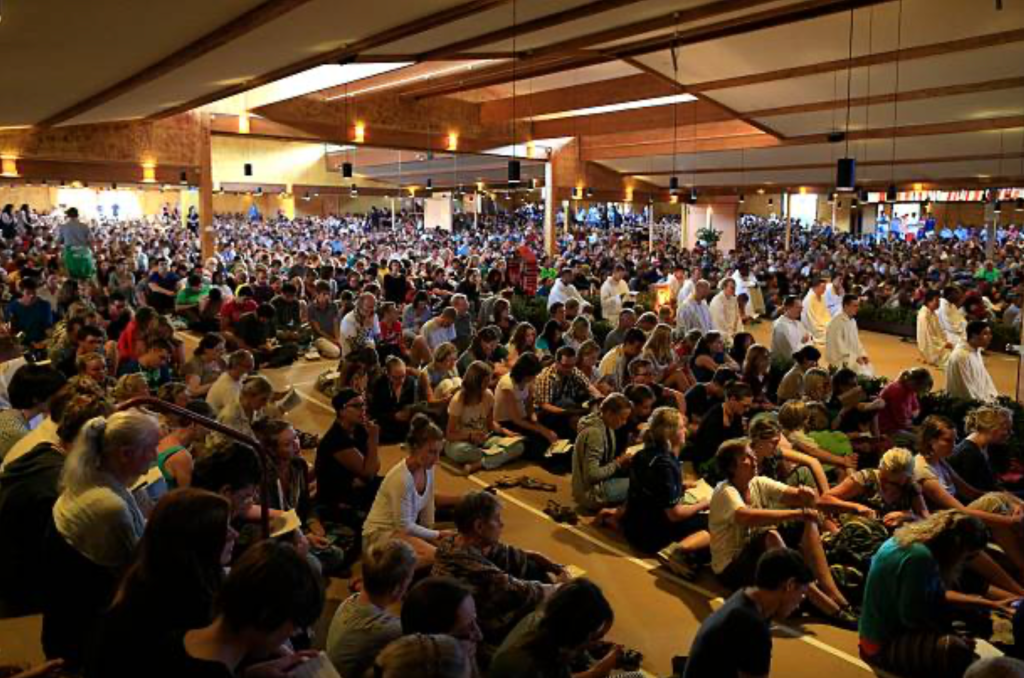
As one website says, “the Taizé community promotes Christian unity and reconciliation through prayer, work, and hospitality,” what Br. Roger called a “parable of communion.” Although it is best known for its music, the community’s principal aim has always been to live out the Gospel in ministry to the poor and love for their neighbor.
It has become a global phenomenon, especially popular with young people. Hundreds—and on special occasions, thousands—of people flock to its services or come for week-long retreats.
Driving up to the sprawling worship building, the Church of Reconciliation, a wooden structure that has been gradually expanded through the years, I was impressed by its simplicity after seeing many grand Gothic and Romanesque churches in the region.
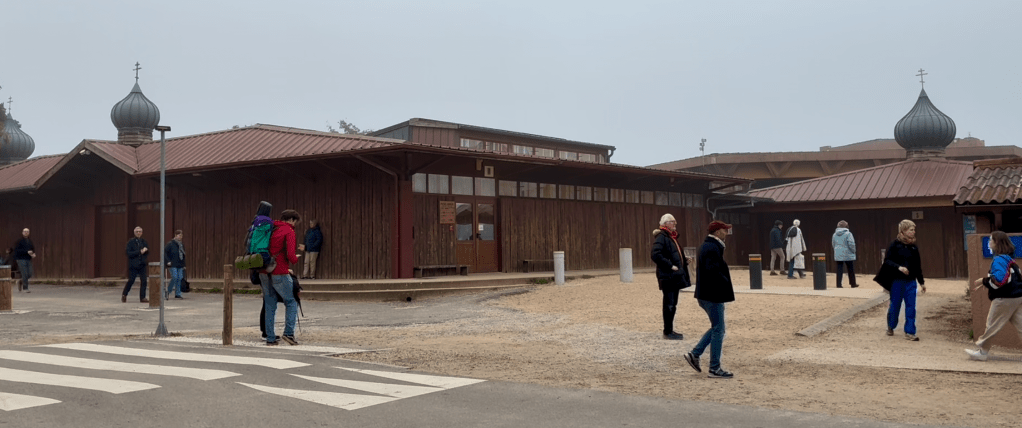
As bells were ringing, people quickly filed in for the ten o’clock Eucharist service.
Entering the sanctuary, I was stunned by the beauty of the place. At the top of the brightly-colored walls were simple stained-glass clerestory windows, and soft lighting and silence contributed to the sense of a sacred space. Most worshipers sat cross-legged or knelt on the carpeted floor, the white-robed monks kneeling in a wide center aisle. We sat on the steps at the side of the space. Side benches also were provided for those who needed them.

Worship roughly follows the customary format for liturgical worship and consists primarily of chants in Latin and sometimes several other languages.
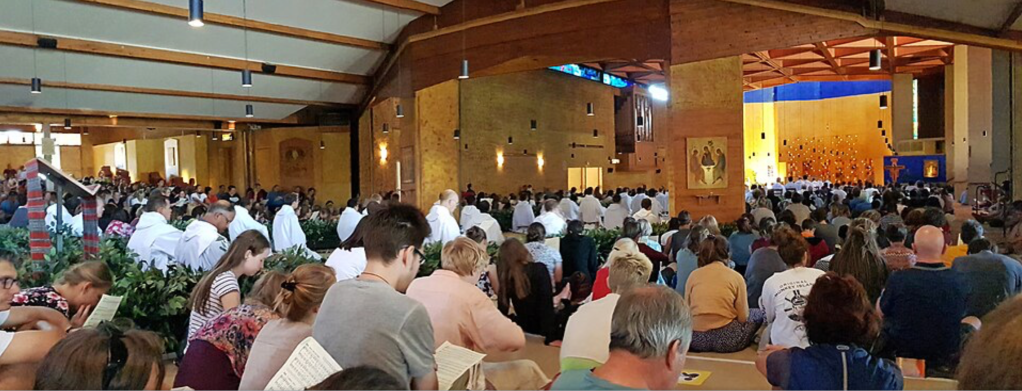
Hearing hundreds of people sing the repetitious chants, most often in four-part harmony, was exceptionally beautiful. Though many are sung a capella, some are accompanied by an excellent guitarist and keyboardist. Sometimes the last note of a refrain is held as a soloist sings a verse, over the harmonic hum, then everyone joins in the repeated refrain. The scripture lessons are read in two, sometimes three, languages. At the end of the spoken prayers, worshipers sit in complete silence for about ten minutes of contemplative prayer. Because of the large number of people, the brothers and lay Eucharistic ministers bring the bread and wine to several stations throughout the space during communion.

I found the service extremely moving. The Holy Spirit was there. The German woman sitting next to me was in tears, and I fought back tears as well. It was one of the most pure worship experiences I have ever had. No sermon was given, but God spoke to me nonetheless.

From the Rule
So, brethren, we have asked the Lord who is to dwell in His tent, and we have heard His commands to anyone who would dwell there; . . . Therefore we must prepare our hearts and our bodies to do battle under the holy obedience of His commands. (RSB Prologue, Part 6)
From Praying with Saint Benedict
Preparing our bodies may be easier to understand than preparing our hearts. We don’t wait until we are physically fit to begin our exercise regimen. We don’t wait until we are well before we begin taking our medicine. However, we may wait until we feel full of God’s love before we are ready to share that love with others, forgetting that in the Gospels, love is an act of obedience.

We should not wait until the warm fuzzy feeling comes before we love our neighbors as ourselves. We mistakenly operate under the assumption that it is the feeling that motivates the behavior but, in fact, it may be the behavior—the act of obedience—that nurtures the emotion.

So what do we do to prepare our hearts? First, we remember to pray, remembering that communication is essential to any relationship, including our relationship to God. Second, we gather with others in our spiritual family in order that we may encourage each other in love and good works. And finally, in obedience, we love our neighbors as ourselves. In feeding the hungry, clothing the poor, sheltering the homeless, and visiting the prisoner, we find Christ in others and discover what God’s love is all about.
Prayer
Loving God, prepare my mind for action, my body for service, and my heart to love you wholly. Give me the grace of your spirit to love others as you have loved me. Amen.

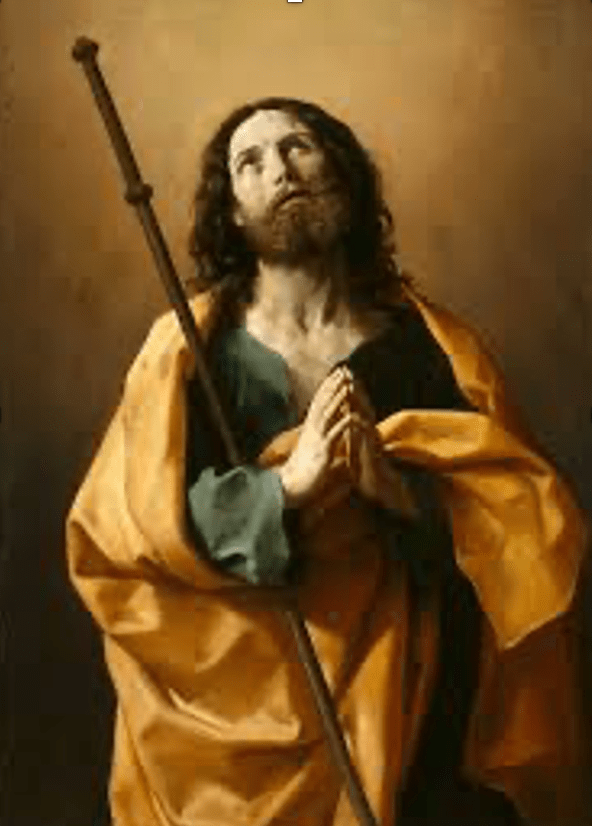
Saint James, also known as the Apostle James or James the Greater, was one of Jesus’ twelve disciples. He was the brother of John the Evangelist. As the two worked with their father mending their nets in a fishing boat on the Sea of Galilee, Jesus called them to become “fishers of men.”
The nickname Jesus gave the two brothers—the “sons of thunder”—was an apt one. When Samaritans would not welcome Jesus because he was on his way to Jerusalem (a city Samaritans hated), the disciples James and John saw this and asked, “Lord, do you want us to call down fire from heaven to consume them?” Jesus turned and rebuked them (Luke 9:54-55).
James was one of three who had the special privilege of witnessing the Transfiguration, the raising to life of the daughter of Jairus, and Jesus’ agony in Gethsemani.
To the best of our knowledge, James was the first of the apostles to be martyred. King Herod had him killed by the sword. Little else is known of his life. Tremendous devotion to him grew up around a tomb in Santiago de Compostela in Spain. How James came to be buried there was a mystery. According to legend, he had traveled to Spain in the early years of his brief ministry and met with little success, winning over only a handful of disciples.
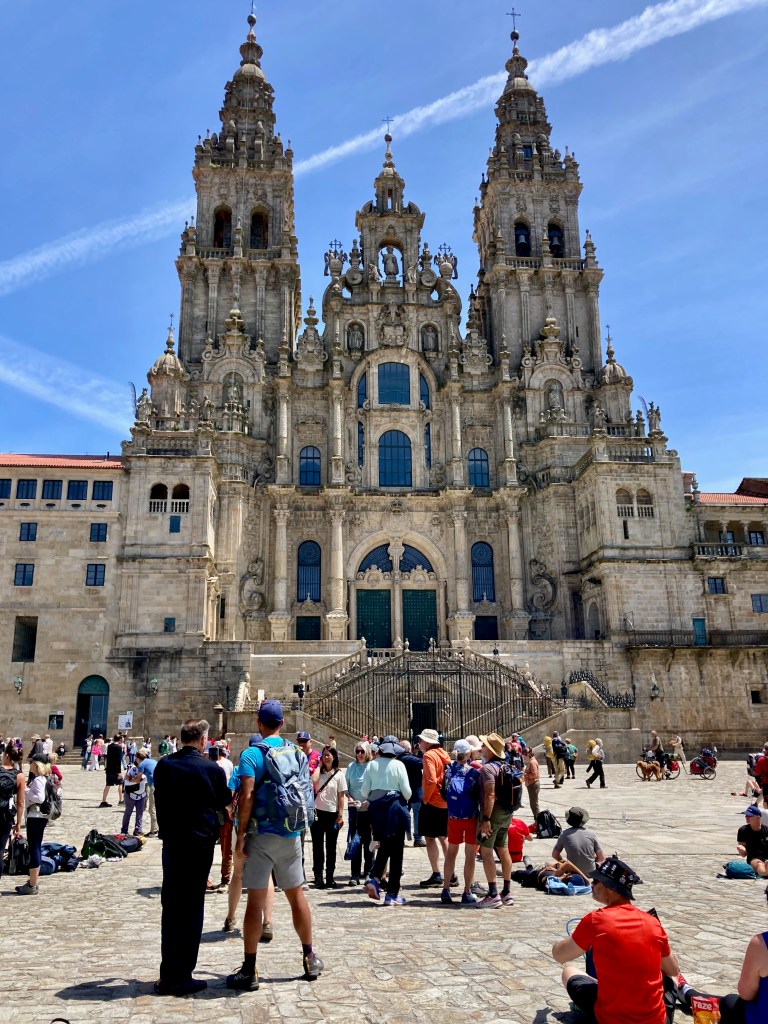
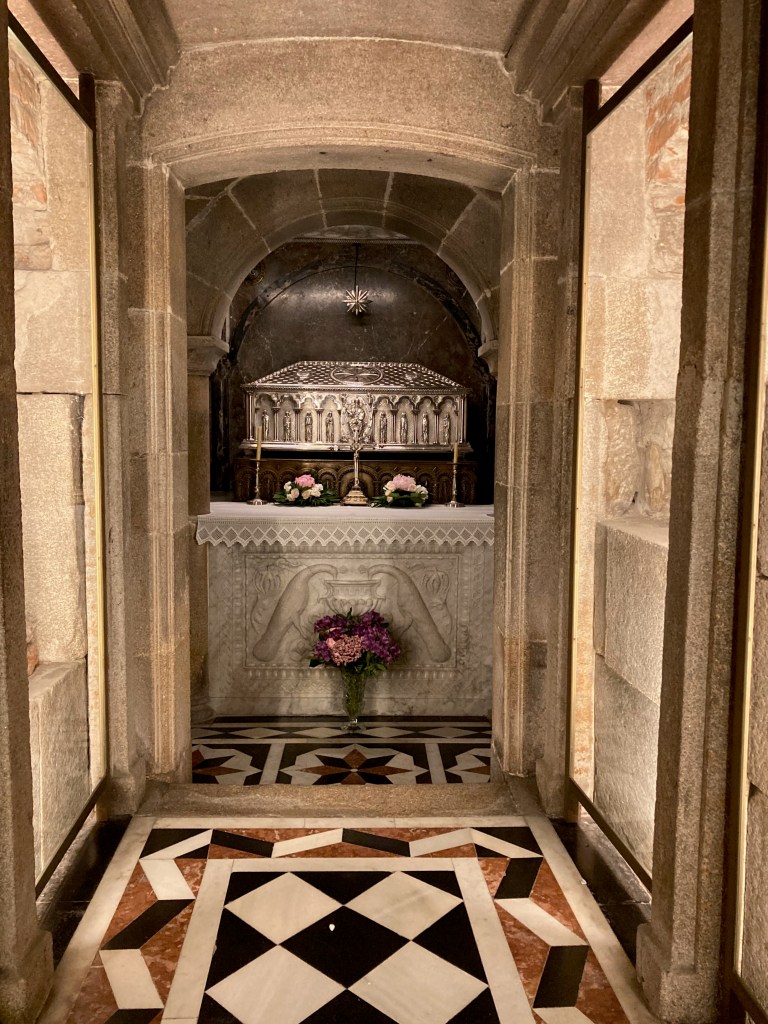
Legend also tells us that two of his disciples, Theodore and Athanasius, accompanied him back to Jerusalem, where he was beheaded at the hands of Herod. It is believed these disciples stole his body and with it climbed into a rudderless boat. They begged God to be their pilot; the boat drifted to northern Spain, and there James was buried. Saint James is the patron saint of pilgrims and of Spain. We celebrate his memorial feast day on the 25th of July.
Prayer
Gracious God, we remember before you today your servant and apostle James, first among the twelve to suffer martyrdom for the name of Jesus Christ; and we pray that you will pour out upon the leaders of your Church that spirit of self-denying service by which alone they may have true authority among your people; through the same Jesus Christ our Lord, who lives and reigns with you and the Holy Spirit, one God, now and forever. Amen.
Pentecost
Excerpted from A Confirmation of Faith: Chap. 8 The Holy Spirit
You may have experienced the Holy Spirit. You may be singing a familiar hymn in church, and you are moved by the words that suddenly have a deeper meaning than you realized previously. You are sitting by a river in a beautiful valley and are overwhelmed by the beauty of the place and the sense of God’s presence. You wake up thinking about someone in need and feel compelled to call or visit that person.
Richard Rohr describes the Holy Spirit as that aspect of God that works secretly, largely from within at the deepest levels of our desiring. It is an inner compass, a “homing device” in our soul, “an implanted desire that calls us to our foundation and our future.” Metaphors of the Holy Spirit in scripture include wind, fire, a descending dove, and flowing water.
Michael Horton emphasizes that the Holy Spirit is the presence who works within us, even to the point of indwelling us and interceding in our hearts.
In John’s gospel, Jesus comforts his disciples before his arrest and crucifixion by saying that God the Father would send an advocate in Christ’s name, the Holy Spirit, who “will teach you everything, and remind you of all that I have said to you” (John 14:26). We celebrate the gift of the Holy Spirit on Pentecost Sunday every year.

The Holy Spirit was dramatically at work in the early church. Luke and Paul make frequent reference to this member of the Trinity in their epistles. On the day of Pentecost, after the speaking in tongues and an inspiring sermon by Peter, many in the gathered crowd welcomed his message and were baptized. According to Acts, about three thousand persons were added to the followers of the Way that day. “They devoted themselves to the apostles’ teaching and fellowship, to the breaking of bread and the prayers” (Acts 2:42). Acts makes frequent reference to the Holy Spirit in the courage of the disciples to preach and heal and bear witness of the Gospel to skeptical leaders. Paul wrote to the church in Rome that it is the Holy Spirit that pours God’s love into our hearts (Rom. 5:5), intercedes for us when we don’t know how to pray (Rom. 8:26), and leads us from fear into confidence as children of God (Rom. 8:14-16).

The earliest Christians spoke of the Holy Spirit as a feminine figure. Many early Christian authors—in particular, those who had been practicing Jews—spoke of the Holy Spirit as Mother. An essential reason for this practice is the fact that the Hebrew word for Spirit, ruach, is in nearly all cases feminine. Also in Aramaic, the word for Spirit, rucha, is feminine. The first Christians, all of whom were Jews, took on this practice.
The Holy Spirit is at work in the church today. The Greek Orthodox prelate and theologian John Zizioulas maintains that the Holy Spirit is “the person of the Trinity who actually realizes in history that which we call Christ,” our Savior. Saint Augustine wrote, “what the soul is to the body of man, that the Holy Spirit is to the Body of Christ, which is the Church.” Our ability to love the stranger and see the Christ in others is a gift of the Spirit. And, as we like sheep are prone to wander, it is the Holy Spirit that intercedes on our behalf and draws us ever so gently but insistently back into fellowship with God.

From the Rule of Benedict (Chap. 67):
When brethren return from a journey, . . . let no one presume to tell another whatever he may have seen or heard outside of the monastery, because this causes very great harm.

From Praying with Saint Benedict:
A few years ago, I occasionally went to Salem, our state capital, for meetings of educators from around Oregon. I would jump in my car, check my fuel level, back out of my driveway, and hit the road. In about fifty to sixty minutes I’d be there. For the most part, it was an uneventful trip, and many times, I arrived without remembering anything about the ride.
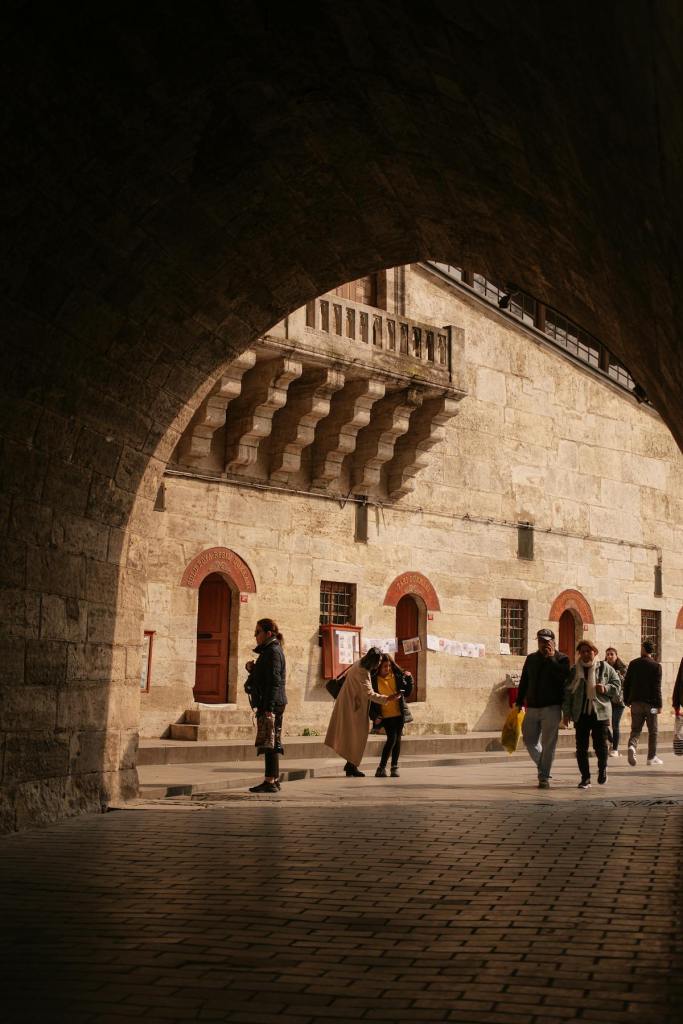
Traveling in the sixth century was a different matter. The Roman Empire had collapsed in the West, and Europe was being overrun by barbarian tribes. Most likely, the monks traveled on foot and were likely to encounter all manner of people and circumstances. Prayers for their journey were undeniably necessary, and they returned with their heads full of the sights and smells and temptations experienced on their travel adventure. Benedict wanted to preserve the sacred, sanctuary nature of the monastery. Tales of the traveler’s experiences would not necessarily be very edifying, especially to the young monks.
Parents certainly know how to censor their conversation around their children. Benedict must have had the same concerns around his novices and younger monks. Restraint of speech involves asking yourself, Is it necessary to say this? before telling about your various adventures in the world. Would what I have to say benefit or uplift those who are listening?

Prayer
God of great wisdom, guard those who travel. Guide their paths and keep them safe. Guard also my lips when I have stories to tell, and give me the wisdom to restrain my tongue. Amen.
From the Rule: “Those who are to be received shall make a promise before all in the oratory of their stability, their reformation of life, and their obedience . . .” (RSB 58).
Reflection from Praying with Saint Benedict:
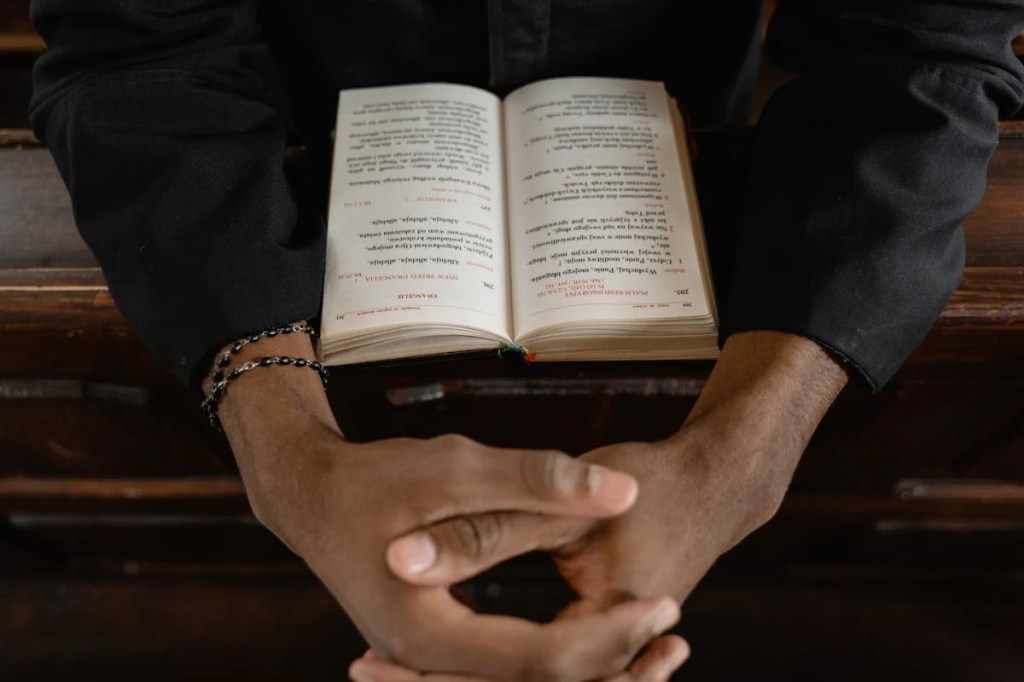
Three promises are made when novices take their vows: stability, obedience, and reformation of life. (Other translations of the Rule transcribe the original phrase conversio morum—or conversatio—as “conversion of life” or “conversion of morals.”)
In my Benedictine community, we define these three vows this way:
• Stability is the promise to remain in community, even though close relationships can create interpersonal tensions, and to stay faithful to our practice.
• Conversion of Life is a commitment to practice the ideals of scripture and the Rule to sanctify everyday living, acknowledging spiritual transformation.
• Obedience is responding with deference to the abbot and others in the community and accepting the example of Jesus to seek what is best for others.

The three promises are interrelated. Stability is an act of obedience to the community, and reformation of life empowers us to be both more stable and more obedient. In other orders, monastics also take vows of chastity and poverty, but Benedict saw these as outcomes of a conversion of life and obedience.

All of the interpretations refer to one’s manner of living. In a monastery, this change of life is indicated in the novices’ final symbolic act: putting aside their own clothes and taking on the wardrobe of the monastery.
As Michael Casey points out, conversion is a necessary starting point for the spiritual journey as well as a necessary device to bring us back on course when we have drifted away. And it is a gift of grace. We cannot bring it about through our own efforts. God calls out to us, and we respond by reorienting our lives to grow into the kind of person God created us to be. We change because we can do no other.
M. Casey, The Road to Eternal Life (Collegeville, MN: Liturgical Press, 2011), 6–7.
S. Isaacson, Praying with Saint Benedict: Reflections on the Rule. (New York: Morehouse, 2021), 8-9.

 Improbable Benedictine