Throughout the Day

Before addressing the mundane tasks involving physical labor that had to be done around the monastery, Benedict writes about prayer, specifically praise. Physical tasks had to be done to maintain the community, and Benedict considered this work to be holy work, too. However, the most important work of God (opus dei) was prayer. The fact that other work was interrupted seven times a day to perform together the Daily Office demonstrated its priority in the daily life of the monastery. 

In Chapter 16 of the Rule, Benedict writes:

“Seven times in the day,” says the Prophet, “I have rendered praise to You” (Ps. 119:164). Now that sacred number of seven will be fulfilled by us if we perform the Offices of our service at the time of the Morning Office, of Prime, of Terce, of Sext, of None, of Vespers and of Compline.

In my 2013 Desert Diary, the account of my first visit to the Monastery of Christ in the Desert, I wrote:

“Observing the daily office seven times a day is very conducive to being in a prayerful state of mind all day. This doesn’t mean I was always consciously praying, but I was aware this afternoon of a heightened state of mindfulness and hypersensitivity to God’s presence.” 

Brother David Steindl-Rast makes the distinction between “prayers” and “prayerfulness.” My experience at the monastery was that joining the monks in prayer several times a day led to an experience of heightened prayerfulness throughout the day. The chanted phrases of praise from the Psalms often were going through my head. Scripture tells us to “pray without ceasing” (1 Thess. 5:17). Through prayerfulness, every activity can and should become prayer. 

Humility and Driving

While driving home from the store one morning this week, I was stopped at a light, and the pickup in front of me was signaling the driver’s intention to turn left from the thru lane, not the marked left turn lane. Sure enough, when the light changed, the truck sat there, while the driver waited for all the cars in the left turn lane to make their turns so he could follow left after them, preventing all the cars behind him from going through the green light. 

I was impatient. And judgmental. Of all the stupid things, I thought. You don’t turn left from the lane on the right. I was tempted to lay on my horn. 

I immediately realized this was a humility problem. I had forgotten Benedict’s injunction to keep the obedient spirit of humility even under difficult, unfavorable, or unjust conditions. As Jane Tomaine puts it, “to recognize that I cannot always be in control.” *


As I continued toward home, I thought of the distress the driver may have been in; missing that turn meant he would have had to continue straight for another three-quarters of a mile in completely the wrong direction without an easy way to get back to where he wanted to be. It occurred to me that I have been in similar confusing and frustrating situations while driving and, I’m sure, made a few other drivers angry at my desperate attempts to correct my navigation errors. 

Benedict’s seventh step of humility tells me that I may not always have the answer and should not hold myself as superior to anyone else. Tomaine defines humility as truthfully and fairly accepting ourselves and other people as they are, which should have a positive influence in our interactions with others with whom we come in contact every day. 

_____________________________

  • Jane Tomaine, St. Benedict’s Toolbox. (New York: Morehouse Publishing, 2015), 213-215. 

Holy Cross

According to Wikipedia, the Feast of the Exaltation of the Holy Cross, every year on September 14th, celebrates, among other things, the finding of the true cross by Saint Helena, mother of Constantine the Great, in about 326-328 CE and the return of the true cross to Jerusalem in 629 CE. The Roman Catholic Church, Eastern Orthodox Church, and some others all claim to possess relics of the true cross as objects of veneration. Protestant and other Christian churches dispute these relics’ authenticity.

As a kid, the church my family attended in Seattle was the merger of an old Norwegian church and an old Swedish church. Being a hard-core Protestant congregation, the sanctuary was simple and unadorned by imagery of any kind. The pulpit stood in the very center of the dais and behind it, the choir loft. Behind the choir loft was a large blank wall made of concrete blocks painted light green. There was talk of hanging a cross on it, but a few objected, thinking it smacked too much of Catholicism. 

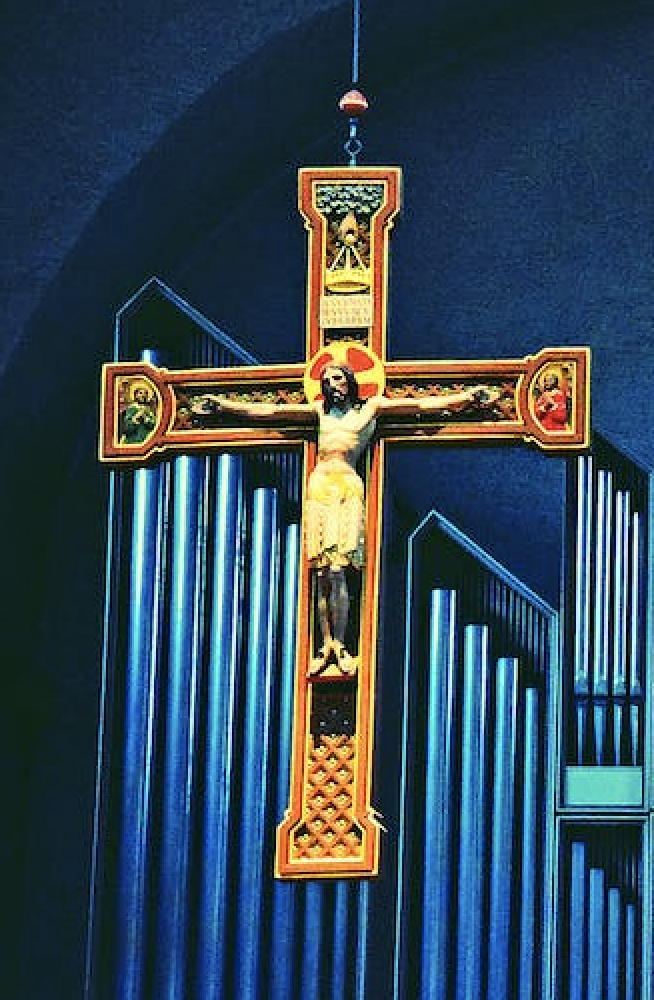
The cross in the church at the monastery I like to visit has a carved, stylized image of the crucified Jesus hanging from its cross, complete with the crown of thorns, nailed hands and feet, and pierced side with a drop or two of red blood painted just below it. In contrast, the cross in the first Episcopal church I joined in Arizona had a triumphant, risen Christ joined to its cross, unblemished, a proper crown on his head and hands outstretched in welcome to those who gazed upon it.

I have friends who object this representation of the cross, saying Christ’s real glory was in his crucifixion, his ultimate sacrifice, showing the extent of his love for us. His broken, lifeless body built a bridge allowing us to pass from the realm of death to the realm of life.

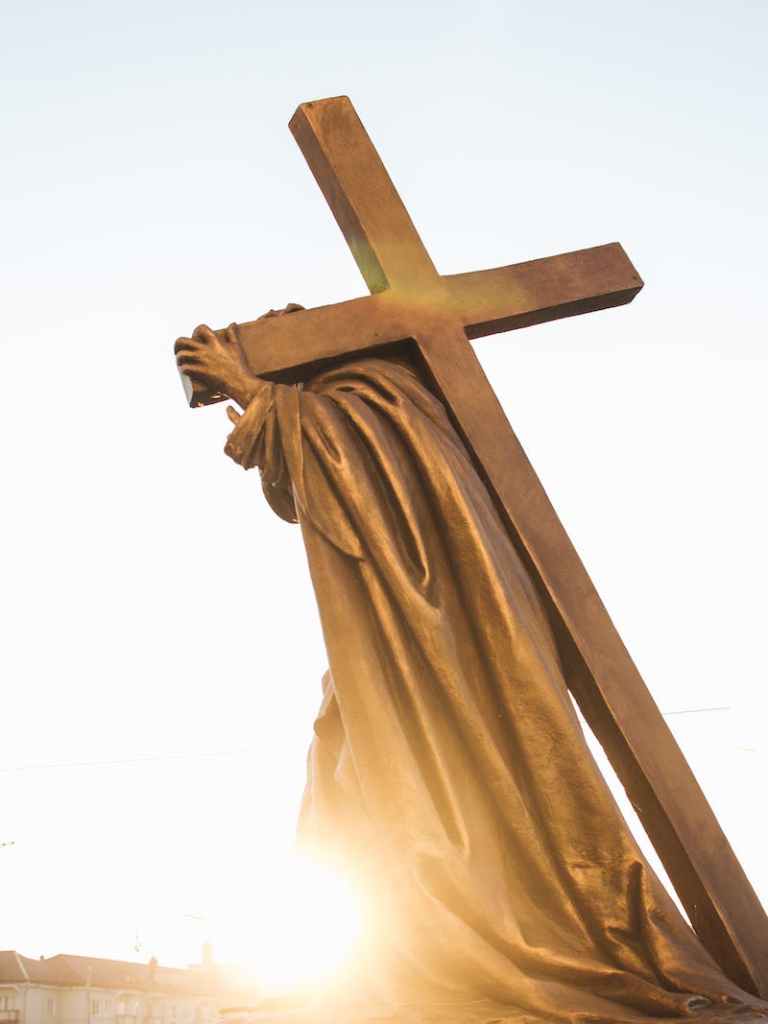
Portaro writes that the cross is the sign of mortality, “the intersection—and tension—of horizontal relationship with one another and vertical relationship with God.”[1] Jesus, in foreshadowing his crucifixion, told his disciples “If any wish to come after me, let them deny themselves and take up their cross daily and follow me” (Luke 9:23). It is this cross that we superimpose on ourselves when we cross ourselves in church. We should do so considering the vertical and horizontal aspects of the cross we assume, denying ourselves in obedience to God (vertically), and responding to the needs of others (horizontal), loving our neighbor as ourselves. This is the cross we carry as we follow Christ. 


[1] Sam Portaro, Brightest and Best: A Companion to the Lesser Feasts and Fasts. (Lanham, MD: Rowman & Littlefield, 2001), 163.

Mutual Obedience

“I don’t do obedience,” my friend said sharply when I was explaining the three vows I took as a Benedictine: stability, obedience, conversion of life. She is a strong, very independent woman who doesn’t hesitate to speak out when she disagrees with a decision made by unenlightened leaders.

Obedience is the one vow that most members of my community have the hardest time with, especially women, understandably sensitive to our culture’s history of patriarchy. But the concept of obedience in the Rule of Benedict isn’t blind obedience, but rather deference in the interest of cooperation and benefit for all.

The concept of mutual obedience runs throughout Benedict’s Rule: in practicing restraint of speech and deep listening, in leadership that seeks counsel among others in the community, in addressing disagreements, at all times being sensitive to the needs of others. It follows Christ’s teaching to his disciples in Mark 10: “Whoever wishes to become great among you must be your servant, and whoever wishes to be first among you must be slave of all. For the Son of Man came not to be served but to serve, and to give his life a ransom for many.” 

Responding with this kind of humility isn’t always easy, even in community with those who share similar values, even with people you know and love. And remembering your role as a servant may take some practice and prayer. The successful functioning of any group that strives to build up each others’ faith depends on its members taking on the role of servant and responding to others with deference and respect. We must honor the possibility that they are God’s messengers and remember they, too, carry the image of Christ. 

Prayer 

Forgive me, gracious God, for pride that makes it difficult for me to be a servant. May love for my brothers and sisters in community enable me to be obedient to their needs, honoring their place in my life. Amen. 

Mountain Top

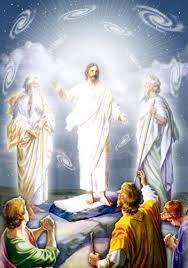
As it falls in the church calendar, this Sunday was a celebration of the Transfiguration, that time on the mountain when three of Jesus’s disciples witnessed a scene in which they saw Jesus in a new light. 

As he was praying, the appearance of his face changed, and his clothes became as bright as a flash of lightning.  He was ethereal and radiant. Two men, whom the disciples took to be Moses and Elijah, were talking to him. It is probably from this Bible story that we get the expression “mountain-top experience,” the topic of Sunday’s sermon by our associate priest, Shana, Trinity’s Canon for Cathedral Life. 

It caused me to think back on the mountain-top experiences in my spiritual life when I saw Christ in a new and sometimes ecstatic way. As a kid, summer church camp was always one. My brothers and I would come back from camp singing the songs we had learned, excited about the friends we had met, and newly resolved to be a faithful follower of Jesus. Another experience, about thirteen years ago, was hearing Elaine Harris talk about the Cornerstone Community and the Rule of St. Benedict. I was deeply moved and felt God’s call like few other times in my life. My times with the monks in New Mexico was also like that, experiencing God in a new way—a quiet experience, but profoundly moving nonetheless. 

The challenge about mountain-top experiences is that you have to come down from the mountain. Peter didn’t want to; he wanted to set up three tents and stay awhile. As Shana said in her sermon, the mountain top is where you go to pray, not where you go to stay. We have to go back down to the valley and do the hard work required as members of the kingdom of God. Just before Luke’s account of the transfiguration, Jesus tells his followers about his coming suffering and death. Then he said to them, “If any wish to come after me, let them deny themselves and take up their cross daily and follow me.”

When challenges in my life make me question the strength of my faith, or I simply become tired of sticking with a spiritual discipline, I think back on my mountain tops, those times when God was very real to me. Often it is those inspiring memories that keep me going. It is also good to look for those occasions in our ordinary day-to-day life when Christ appears in a new way to us.

“I Have Seen the Lord”

Bible Trivia Question: Who was the first apostle?

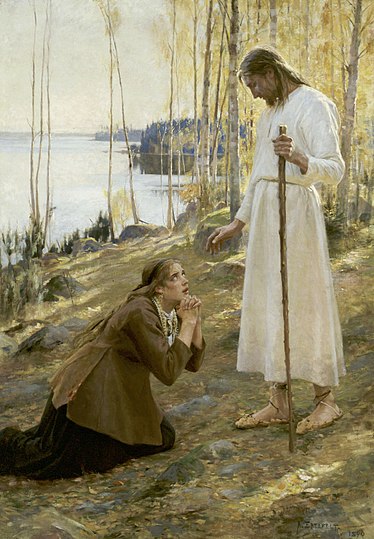
In all four gospels, Mary Magdalene was a witness to Jesus’ crucifixion, the empty tomb, and Jesus’ resurrection. In John 20, after Mary had come to the tomb early in the morning, Jesus said to her, “Mary,” causing her to suddenly realize he was not the gardener, but her teacher and Lord. He told her to go to her fellow disciples and tell them, “I am ascending to my Father and your Father, to my God and your God.” Mary ran to the disciples with the news, declaring “I have seen the Lord!” For this reason, she is known in some Christian traditions as the “apostle to the apostles.” She is mentioned by name twelve times in the canonical gospels, more than most of the apostles and more than any other woman in the gospels, other than Jesus’s family.

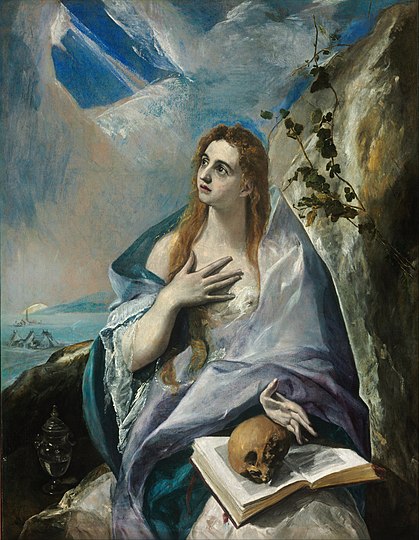
El Greco, The Penitent Magdalene

Magdalene is likely a toponymic surname for Mary, meaning that she came from the town of Magdala, a fishing town on the western shore of the Sea of Galilee. There is no evidence that Mary was a “fallen woman,” a misconception that continues to this day. Her portrayal as a prostitute began in 591 when Pope Gregory, in a homily, confused Mary Magdalene with the unnamed “sinful woman” who anointed Jesus’ feet. She became the patron saint of “wayward women” and, in the eighteenth century, moral reformers established Magdalene asylums to help save women from prostitution.

In fact, Mary was one of the women who traveled with Jesus and helped support his ministry “out of their resources,” suggesting that she might have been a woman of means.

I believe Mary Magdalene’s primary significance is as a witness to the living Christ. (In addition to signifying her place of birth, Magdalene is a female name of Latin origin that means watchtower or watchful.) What is the most effective witness we can give of the living Christ’s presence in our own lives? Perhaps by showing and telling how Christ’s love has been realized within us. Can we, like Mary Magdalene, say “I have seen the Lord?” 

Stewardship

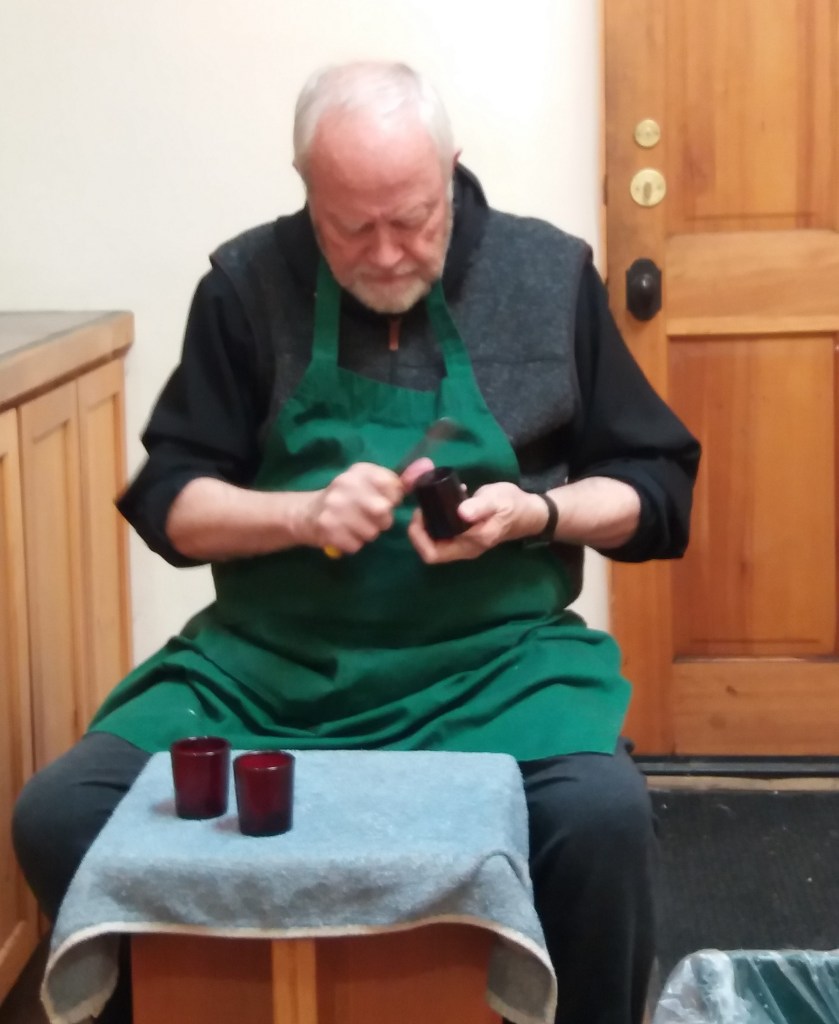
Benedict has lots to say about stewardship, especially in chapters 31 through 34 of his Rule for Monasteries. To begin with, he mandates that the monastery cellarer (the monk in charge of supplies and tools) should be someone who is wise, mature, temperate, and not wasteful, among other things. He instructs the cellarer to take care of everything without waiting for an order from the abbot to do so, regarding all utensils and goods of the monastery as he would the sacred vessels of the altar. In other words, all the practical matters of our communal life should be considered sacred. 

Second, the cellarer must show the same kind of attention and care to the people in his community, especially the sick, the young, guests of the monastery, and the poor. Benedictine spirituality is as much about compassion, wise management, and hospitality as it is about the contemplative aspects of religious life.

In her book, The Monastic Heart, Chittister extends this care of material things to the conservancy of creation, being conscious of the impact on the earth of the things we own. In her words, “Preservation, conservation, authenticity, and moral impact mark the monastic charism of stewardship.”[1]


Finally, there is a fourth aspect of stewardship that the apostle Peter writes about in his first epistle—that is, being stewards of God’s grace. Peter writes, 

The end of all things is near; therefore be serious and discipline yourselves for the sake of your prayers . . . Like good stewards of the manifold grace of God, serve one another with whatever gift each of you has received. Whoever speaks must do so as one speaking the very words of God; whoever serves must do so with the strength that God supplies, so that God may be glorified in all things through Jesus Christ. To him belong the glory and the power forever and ever. (1 Peter 4:7-11)

We are stewards of our relationship to God and to others. We must be attentive to the spiritual practice that gives us “the strength that God supplies” to exercise the spiritual gifts we have been given. We are called to be the light of Christ that others will see in us. 

–––––––––––––––––––

[1] J. Chittister, The Monastic Heart. (New York: Convergent, 2022), 220.

How to Pray

In Chapter 20 of Benedict’s Rule, he talks about private prayer. As he puts it, when approaching a powerful person with a proposal or request, wouldn’t we assume a humble and respectful manner? Why would we lay our petitions before God with anything but the same humble and respectful manner?

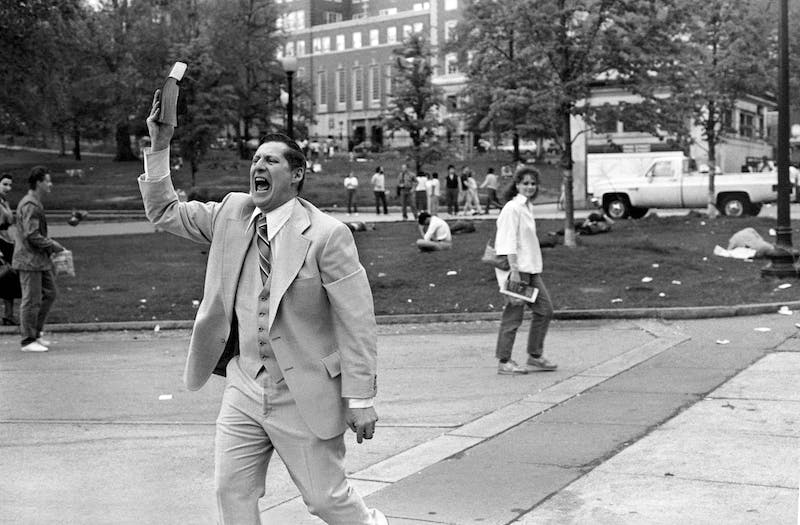
In Matthew 6, Jesus tells his followers, “Whenever you pray, do not be like the hypocrites; for they love to stand and pray in the synagogues and at the street corners, so that they may be seen by others. Truly I tell you, they have received their reward. 

But whenever you pray, go into your room and shut the door and pray to your Father who is in secret; and your Father who sees in secret will reward you.”

I was raised in a church in which one indication of a person’s piety was his or her ability to give long, passionate, eloquent prayers. When faithful members would get together in restaurants, no one would think to touch their food until someone among them would say a bold, embarrassingly long prayer that sometimes silenced conversation at nearby tables. Perhaps this is not the same as standing on a street corner, but is still a pretty conspicuous act of piety. 

However, Christ taught we shouldn’t pray to be seen or heard by others, but that we should pray privately and humbly. And Benedict adds that, when there is an occasion for a collective prayer (and it is okay to pray together before a meal), the prayer should be short. God knows our hearts. There is nothing we can tell him that he doesn’t already understand. 

St. Barnabas

One could not find a better model of openness to the Holy Spirit and Christ-like service than the example shown by St. Barnabas whom we celebrate on June 11.

His given name was Joseph who, according to the book of Acts, was a Levite from Cyprus. Levites were members of the priestly Hebrew tribe of Levi. While priests had to be descendents of Aaron, most Levites held lesser ceremonial offices such as cantors for Temple services, caretakers of the Temple, teachers, judges, and other important roles. 

Levites also maintained cities of refuge in biblical times. One might guess that Joseph could have had a role in serving refugees and sanctuary seekers, being known for his generosity and compassion. His friends among the early apostles gave him the name Barnabas, meaning “son of consolation” or “son of encouragement,” and the name stuck. The book of Acts describes him as “a good man, full of the Holy Spirit and of faith” (11:24). 

When the other apostles at the time were afraid of the new convert Saul (who later became Paul) because of his ruthless persecution of the followers of the Way, it was Barnabas who befriended him, listened to his story, and defended him to the other apostles. Paul chose Barnabas to be his partner in ministry, preaching the Gospel in Antioch, Jerusalem, Cyprus, Perga, and many other cities around the Mediterranean region. It is believed that Barnabas was martyred in 61 CE in his native town of Salamis on Cyprus and was buried secretively by his nephew John Mark. 

Barnabas’s life illustrates Benedict’s second step of humility, that we “love not our own will nor take pleasure in the satisfaction of our desires; rather we shall imitate by our actions that saying of Christ’s: ‘I have come not to do my own will, but the will of the One who sent me’.[1] His life is also an example of the love and confidence we can have in serving Christ by surrendering to the power of the Holy Spirit.


[1] Joan Chittester’s translation, The Rule of Benedict: Insight for the Ages. (New York: Crossroad, 1992), 66.

The Holy Spirit

Sunday, May 28

This Sunday we celebrate Pentecost, that extraordinary event when, after Christ’s ascension, the followers of The Way were gathered in one place. They heard a sound like a violent wind and saw what seemed to be tongues of fire that came to rest on each of them. They were filled with the Holy Spirit.

Today the Holy Spirit most often comes to us in a less dramatic fashion. You may be singing a familiar hymn in church, and suddenly you are moved by the words that suddenly have a deeper meaning than you realized previously. Perhaps you are sitting in a parish committee meeting and you all sense a spirit of consensus and the assurance that the decision you have reached together is in keeping with God’s will. You are listening to a sermon or a guest speaker at a Sunday forum, and you have the feeling that the speaker’s words were intended for you and were exactly the thing you needed to hear. You are sitting by a river in a beautiful valley and are overwhelmed by the beauty of the place and the sense of God’s presence. You wake up thinking about someone in need and feel compelled to call or visit that person. 

Richard Rohr describes the Holy Spirit as that aspect of God that works secretly, largely from within at the deepest levels of our desiring. It is an inner compass, a “homing device” in our soul, “an implanted desire that calls us to our foundation and our future.” [1]


The signs of the Spirit I have learned to look for and have come to appreciate are what Paul referred to as the “fruit of the Spirit”: love, joy, peace, patience, kindness, generosity, faithfulness, gentleness, and self-control (Gal. 5:22-23). Benedict enjoins us, in everything we do, to offer it to God “with joy of the Holy Spirit.[2]

And, of course, we recognize instantly that to live this way consistently, every day of our lives, is impossible through our own efforts. Nadia Bolz-Weber reminds us that God’s work in the world has always been done through sinners.[3] We take on this challenge of living a holy life with a vision of what it means—as Benedict puts it—to dwell in God’s tent, understanding that it is the Holy Spirit working in us that keeps that vision alive and propels us along our spiritual path. 


  1. Richard Rohr, Falling Upward. (San Francisco: Jossey-Bass, 2011), 88-90.

2.  RSB 49, Part 1

3.  Nadia Bolz-Weber, Accidental Saints (New York: Convergent Books, 2015), 203.