In North Africa around the year 202 or 203, five catechumens were arrested. Among them was Perpetua, a young mother, and a slave named Felicitas, or Felicity. Along with three of their male companions, they were recent converts to Christianity who were preparing for baptism. Being a Christian was not a crime at that time, but not surrendering to the will of the governor was a crime, and he had ordered them to offer sacrifices to honor the emperor. Being Christians, they refused.
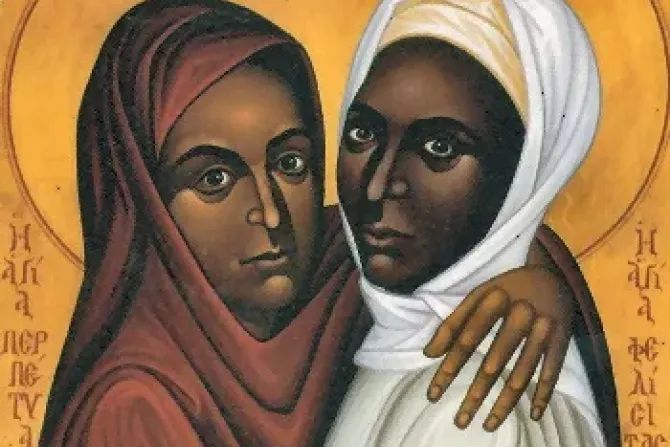
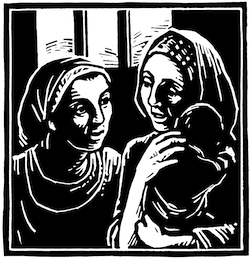
Perpetua kept a diary of her final days. So, unlike the stories we have of other saints, we have a firsthand account of their suffering and persecution. She wrote, “I was terrified, as I had never before been in such a dark hole. What a difficult time it was! With the crowd the heat was stifling; then there was the extortion of the soldiers; and to crown all, I was tortured with worry for my baby there.”
But members of the Christian community visited and ministered to them while they were in prison, and the five were baptized while in prison.
Felicity, the slave, was pregnant when put into prison, and according to local custom, a pregnant woman could not be put to death. However, Felicity couldn’t bear to be separated from the others as they faced their execution. While in jail, she went into labor and delivered a baby girl, who was then smuggled out of the prison to be raised by Felicity’s sister.
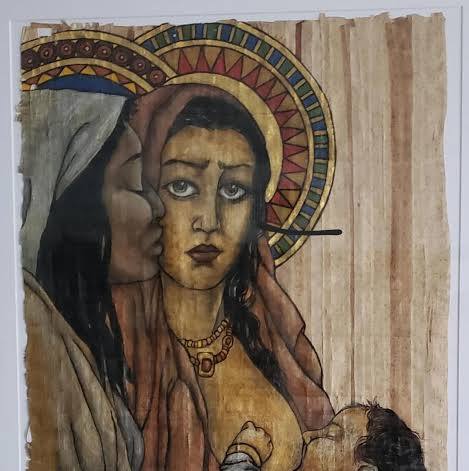

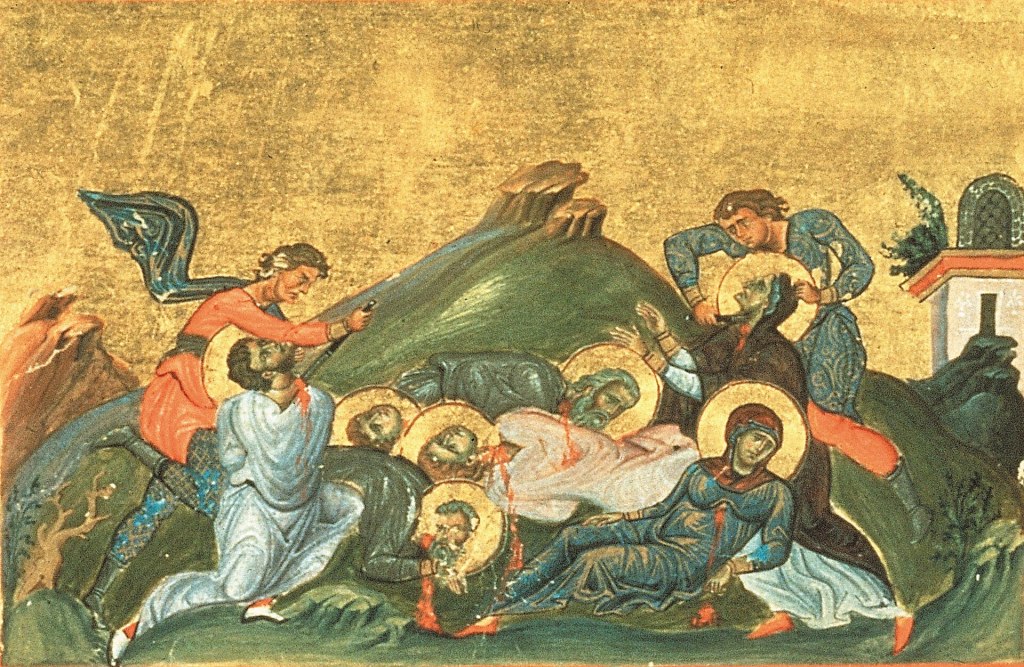
One of the male martyrs, Secundulus, died while in prison. The remaining four, receiving their sentence, were sent into the arena to face wild beasts—among them a leopard, a bear, a wild boar, and a wild heifer—as entertainment for the governor and his guests. In a series of encounters that must have frustrated the audience, the beasts failed to kill the catechumens and they finally died by the sword of the gladiators.
Before meeting her fate, Perpetua spoke to her brother and the fellow catechumens, saying: “You must all stand fast in the faith and love one another, and do not be weakened by what we have gone through.”
It might be easy, in what many may think of as our safe, ostensibly Christian nation, to think of martyrdom as something that happened in the past—under Roman rule in the days of the early church. But there have been modern-day martyrs as well. In May, 2014, The Times of London published an editorial entitled “Spectators at the Carnage.” It began with these words: “Across the globe, in the Middle East, Asia and Africa, Christians are being bullied, arrested, jailed, expelled and executed. Christianity is by most calculations the most persecuted religion of modern times.”
What should we do? First of all, we shouldn’t surrender to fear. In his second letter to Timothy, Paul exhorted, “God has not given us the spirit of fear, but of power, and love, and self-control.” Second, in humility, we might pray that, like Felicity and Perpetua, we too will give ourselves more fully and more whole-heartedly to God’s will for us. In his letter to the persecuted church in Rome, Paul exhorts them to “present your bodies as a living sacrifice, holy, and acceptable to God, which is your reasonable service of worship.”
Becoming self-sacrificial, for most of us, won’t likely lead to martyrdom, but it may lead to a role we haven’t yet played. In her book, The Time is Now, Joan Chittester challenges the reader to follow the prophets of old. That is, to refuse to accept a moral deterioration of the present and insist on heralding the coming of an unknown, but hopefully more righteous and just future. But Sister Joan also cautions that in all cases, prophets bear the punishment that comes from the systems whose dishonesty and human damage they expose, becoming “a living sacrifice.”
As Richard Rohr writes, the cross is a very dramatic image of what it means to be usable for God. Following Jesus is a vocation to share the fate of God for the life of the world and to suffer ever so slightly what God suffers. Mother Maria Skobtsova, an Eastern Orthodox monastic, wrote, “I am your message, God. Throw me like a blazing torch into the night, that all may see and understand.”
Collect
O God, who strengthened your servants Perpetua, Felicity, and their companions to make a good confession and encourage one another in the time of trial: Grant that we who cherish their blessed memory may be encouraged by their prayers to share their pure and steadfast faith and win with them the palm of victory; through Jesus Christ our Lord, who lives and reigns with you and the Holy Spirit, one God, for ever and ever. Amen.
 Improbable Benedictine