Probably the most difficult challenge for focused, self-disciplined, achievement-oriented people on their path to God’s kingdom is giving up control of our own ambitions in order to take up our cross and follow Christ. However, our own will often stands in the way of God’s will. Proverbs 16 tells us that sometimes there is a way that seems to us to be right, “but in the end it is the way to death,” and Christ himself taught “For all who exalt themselves will be humbled, and those who humble themselves will be exalted” (Luke 14:11).
In his Rule, Benedict states, “The first step of humility…is that we keep the reverence of God always before our eyes” (RSB 7). Michael Casey points out that those who have truly encountered God are filled with a sense of wonder at the mystery and, simultaneously, confounded by a sense of their own insignificance.
He continues, “This sense of littleness is what opens us up to be filled with the gifts of God, a God who looks with favor on the humility of God’s servants. Humility is not primarily a social virtue, the opposite of arrogance. It is the necessary consequence that follows an encounter with the loving holiness of God. After that it doesn’t matter much what status others assign to us.”[1]
Benedict’s chapter on humility is the longest and—Esther DeWaal argues—the most crucial of the chapters in the Rule. [2] And I think her claim makes sense. It is humility that enables us to submit to those in authority, listen with “the ear of the heart,” offer hospitality, take our turn in the kitchen, become a servant leader, restrain our speech, tend the sick and the elderly, pray.
The derivation of the word humility is from the Latin humus, the ground or earth. In DeWaal’s words, it means “to be earthed, centered, grounded.” Laura Swan describes it as becoming very real, moving toward our true self made in the image and likeness of Christ. [3] It is a state of being that should appeal to all of us.
Michael Casey, Balaam’s Donkey: Random Ruminations for Every Day of the Year. (Collegeville, MN: Liturgical Press, 2019).
Esther DeWaal, A Life-giving Way: A Commentary on the Rule of St. Benedict. (Collegeville, MN: Liturgical Press, 1995), 57.
Laura Swan, Engaging Benedict: What the Rule Can Teach Us Today. (Notre Dame, IN: Ave Maria Press, 2005), 72.
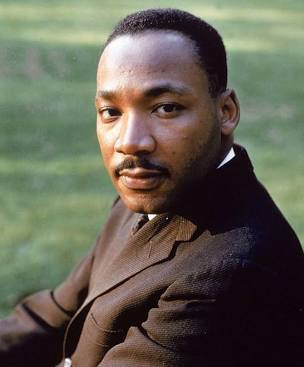
Today we remember the powerful leadership of Martin Luther King, Jr. and the enormous role he played in moving ahead the cause of racial justice. According to researchers at Harvard Business School, King exemplified not just one, but two types of vital organizational leadership.[1] First, he articulated a clear vision, set goals and established high expectations. Second, he was an example of servant leadership. He did not ask his followers to do anything he was not willing to do, including putting his life on the line for the cause.
In the 6th century, Benedict was ahead of his time in regard to understanding effective leadership. He delegated authority widely—to his prior, his deans, the cellarer, and the porter—and he listened—not just to his leadership team, but to the whole community. In chapter 3 of the Rule he states: “Whenever any important business has to be done in the monastery, let the Abbot call together the whole community and state the matter to be acted upon. Then, having heard the brethren’s advice, let him turn the matter over in his own mind and do what he shall judge to be most expedient . . .”. It is not just from the wise older men that he solicits advice, but from the young monks as well. “The reason we have said that all should be called for counsel is that the Lord often reveals to the younger what is best.”
Twenty-first-century books on leadership would not be too much different in their advice to readers. Among the eight essential leadership skills identified by Lauren Landry [2] is receiving and implementing feedback. In a survey by the American Management Association, more than a third of senior managers, executives, and employees said they “hardly ever” know what’s going on in their organizations. Asking for feedback from your team, says Landry, can not only help you grow as a leader, but build trust among your colleagues.
What stands out in Chapter 3 of Benedict’s Rule—in contrast to more authoritarian monastic rules—is the principle of humility, as modeled by the abbot in the way he leads. His leadership style is not an autocratic one and respects the wisdom of others in the community.
Prayer
Gracious God, give me the wisdom to seek council when I am making decisions that affect others and the humility to honor and support the decisions of those who lead me. May listening, love, and mutual obedience be present in our life together. Amen.
______________________________
“Martin Luther King, Jr.: A leader to inspire businesses.” W. P. Carey News, Arizona State University, 1-17-2022. https://news.wpcarey.asu.edu/20220117-martin-luther-king-jr-leader-inspire-businesses
I don’t always make New Year’s resolutions. Sometimes the resolutions made on January 1st have dissolved by January 31st. This New Year’s Day, however, I want to return to Benedict’s injunction in his Rule for Monasteries.
Many authors have pointed out that Benedict’s first bit of instruction in the Rule is to listen: “Listen carefully, my child, to my instructions, and attend to them with the ear of your heart. This is advice from one who loves you; welcome it and faithfully put it into practice” (RSB, Prologue).[1] As happens throughout the Rule, it appears that Benedict’s inspiration here is scripture: “Listen, children, to a father’s instruction, and be attentive, that you may gain insight” (Prov. 4:1).
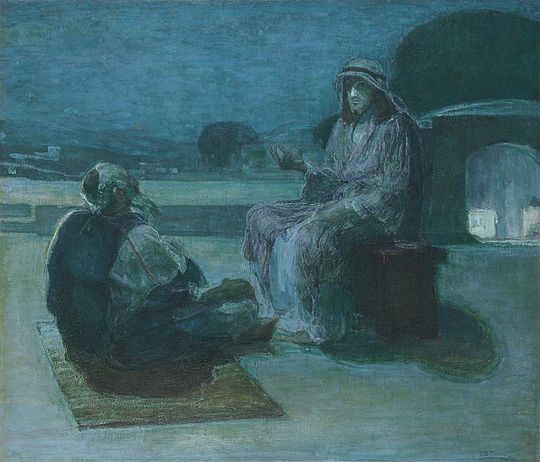
When I think of someone who could listen with “the ear of his heart,” I think of Nicodemus, whose story is told in the third chapter of John. Nicodemus was a Jewish leader and member of the Sanhedrin, the religious tribunal. He had many reasons not to be seen with a controversial figure like Jesus and came secretly to him by night with a burning question about the source of Jesus’s power.
Jesus did not give him a predictable explanation or one that was easy to immediately understand. They had a long conversation in which Jesus said to him, “No one can see the kingdom of God without being born again.” The Greek word for ‘again’ also contained a root that meant “from above.” In other words, eternal life—a life of the Spirit—begins with transformation, being born from above. Evidence of Nicodemus’s transformation came from his later defense of Jesus during his trial in the Sanhedrin and then claiming Jesus’s body for burial in the family tomb.
Deep listening, then, can lead to transformation. Where could I learn to listen “with the ear of my heart”? First, listening to God. Like others, I suspect, my prayers tend to be long on requests and short on listening. I’ve got to be more regular in my practice of contemplative prayer, as Cynthia Bourgeault defines it, “simply a wordless, trusting opening of self to the divine presence.”[2]
I could do a better job of listening to the Holy Spirit, as she speaks to me in scripture and those I come in contact with.
I could do a better job of listening to my spouse.
I want to listen with the ears of my heart when I talk with others, especially those who are hurting.
As a New Year’s resolution, listening would be a good choice, a goal that would certainly lead to other positive transformations in my life.
Translation from Joan Chittester, The Rule of Benedict: Insights for the Ages. (New York: Crossroad, 2009), 19.
Advent has always been one of my favorite times of the year. I love the Advent hymns, readings, and its themes of anticipation, expectation, and hope. If we ever needed a season of hope, it certainly is now, having come through three years of political chaos, social unrest, a devasting pandemic, and economic uncertainty.
Dietrich Bonhoeffer wrote “The celebration of Advent is possible only to those who are troubled in soul, who know themselves to be poor and imperfect, and who look forward to something greater to come.”
Is our recent turmoil a blessing in disguise? One of my favorite writers, Michael Casey, Benedictine monk, writes about the “grace of discontinuity,” a time when old habits and routines don’t work any longer and we are forced to look to new ways of being and new ways to practice our faith. We are called to a conversion of life, which Casey defines as a process by which the uncreative sameness of our life is fractured and we have the opportunity of reorienting ourselves toward becoming the kind of person God created us to become. Advent is a time for us to acknowledge our need for grace and to pray for the Holy Spirit to renew his work in us.
In his book, The Road to Character, the New York Times columnist David Brooks makes the distinction between our career-oriented, ambitious nature (Adam I) and the interior, moral nature that wants to serve rather than conquer (Adam II). To nurture your ambitious goal-oriented life (Adam I), it makes sense to nurture your strengths. To nurture our moral, self-giving core, it is necessary to confront our weaknesses.[1]
As we move into this Advent season, let’s all do some inner work, beginning with welcoming our failures, frustrations, and life disruptions as opportunities for transformation, finding time for prayer and contemplation, reorienting ourselves toward becoming the kind of person God created us to be, a reflection of Christ.
[1] David Brooks, The Road to Character. (New York: Random House, 2015), xii.
“Monastics ought to be zealous for silence at all times, but especially during the hours of the night” (RSB 42:1). Benedict goes on to say that upon leaving Compline, the last service of the day right before bedtime, no one should speak. Absolute silence is required.
From Praying with Saint Benedict:
Years ago, I attended a men’s weekend retreat in Arizona. On the first night of the retreat, after the evening service, we were instructed to keep silence for the rest of the evening as we went to our dorm and prepared for bed. We followed those instructions and used gesture to communicate when we needed to as we made up our bunks, completed our evening ablutions, and undressed for bed. I remember how refreshing it seemed at the time not to have to make conversation with these men who were, as yet, strangers to me and to let the profound lessons and new insights from our evening service resonate within my head. I slept very well.
Visiting the monastery, it is also meaningful to end the day with Compline (our “evening sacrifice”) and then return to my room in silence, letting the events of the day sink in. Silence is the profound gift of my time there. The daily offices and the silent times in between them give ample time for God to speak to the heart.
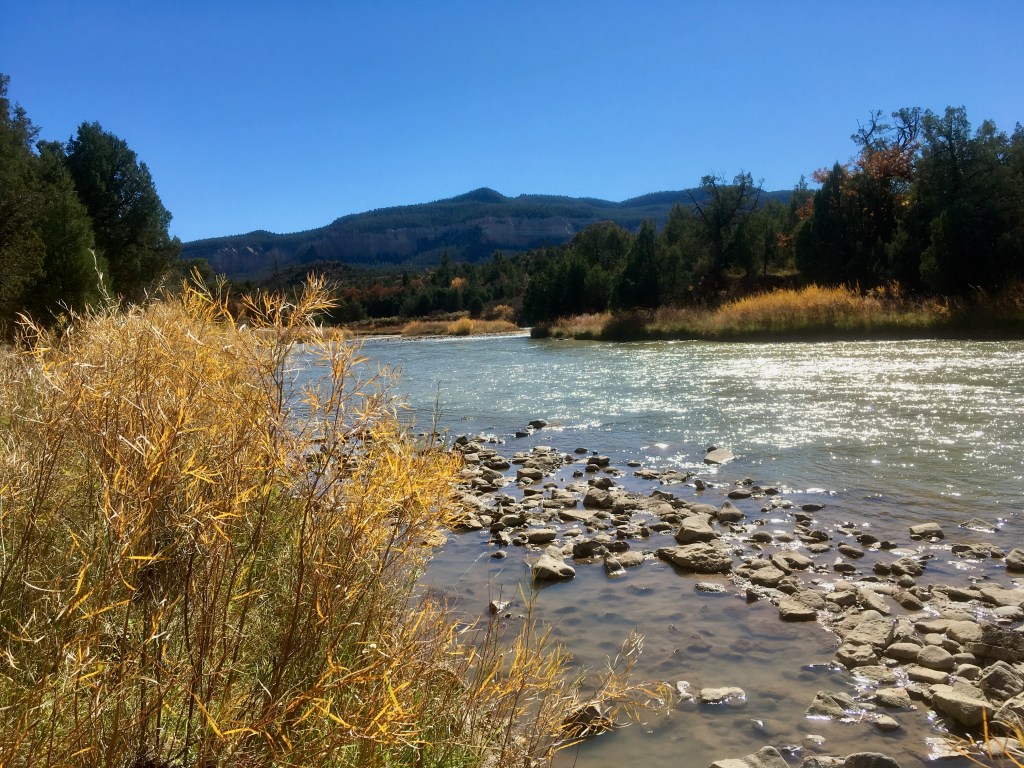
In the afternoon, I sometimes sit by the river, reveling in the silence. Literally all I can hear is the breeze, a cricket rhythmically chirping nearby, and the sound of a chatty magpie somewhere off in the distance. Simplicity and silence have great value, removing the distractions in life, making room for other things in one’s consciousness and spirit.
From the hymn:
Let all mortal flesh keep silence, And with fear and trembling stand; ponder nothing earthly-minded, for with blessing in his hand Christ, our God, to earth descending, comes our homage to command.
But the souls of the righteous are in the hand of God, and no torment will ever touch them. In the eyes of the foolish they seemed to have died, and their departure was thought to be a disaster and their going from us to be their destruction, but they are at peace. (Wisdom 3:1-3)
Last week was the week the Church celebrated all saints and all souls. This past weekend, Mike and I participated in an internment ceremony for one departed soul in Trinity Cathedral’s Memorial Garden and went to a memorial service for another in Bellevue, Washington. Both services were for friends who were honored for their intelligence, humor, faith, graciousness, and extreme kindness to others.
Their passing followed what seems to have been a season of death, not due to Covid but during Covid. My mom was the first, followed by a wonderful piano teacher, a former high school teacher, and a dear clergy friend. I have recently learned of the life-threatening illnesses of three other good friends and good persons.
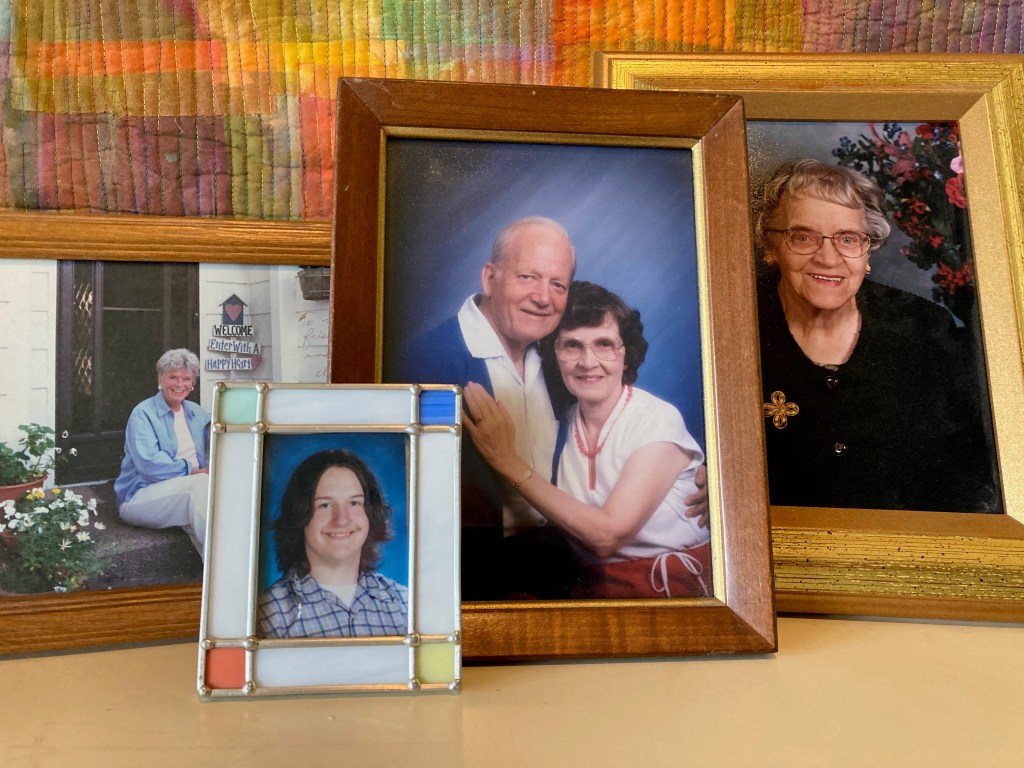
At Sunday’s evensong for All Souls, friends brought photos of loved ones they have lost in the last few years and placed them around the altar. As the choir sang the beautiful and moving anthem “Souls of the Righteous” by Lewis Geraint, tears ran down my face. The cumulative grief for all our departed loved ones had finally caught up with me.
I suspect that many of my friends think it’s somewhat quaint that I believe in heaven. It’s not a childhood image of heaven based on Biblical metaphors (streets of gold, gates of pearl, angels with harps floating around God’s throne). But Jesus talked about heaven as a welcoming place in the life that follows our current existence on earth. The Gospel of Matthew alone has over sixty references to heaven. In his Rule for Monasteries, St. Benedict describes heaven as a place where the Lord is always looking down on the children of earth “to see if there be anyone who understands and seeks God” (Ps. 14:2) (RSB 7).
In The Great Divorce, C.S. Lewis portrays our next life as a natural extension of our life here on earth, carrying with it the consequences of choices we make while on earth. If heaven, like God, is eternal, why can’t it flow backward as well as forward and be part of our life on earth as well as our experience after death? As Dwight L. Moody once preached, “We talk about heaven being so far away. It is within speaking distance to those who belong there. Heaven is a prepared place for a prepared people.” Father Frank, my first priest after joining the Episcopal church, said that our spiritual path as Christians is preparing for that life we will live when we are united with Christ.
The reason I believe in heaven is that, like many others, I have experienced something of heaven on earth. I might be overcome with emotion, feeling a Divine presence as I sing the words to an especially meaningful hymn in church. I might feel inexpressible joy sitting next to the Chama River in the profound silence and beauty of a New Mexico canyon.
I feel chills up and down my spine when hearing the Sanctus from Fauré’s Requiem. I might think of heaven when I’m sitting around a dinner table with a group of people who love God, love life, and love each other, experiencing a foretaste of a heavenly banquet. It is in these thin places where the veil between earth and heaven seem very porous and one can keenly sense the sacred.
I don’t maintain a faith practice in the desperate hope of going to heaven someday. I maintain a faith practice because I experience heaven now. We are now in the hands of God, just as we will be when we depart this life. I cannot think of a richer and more gratifying way to live.
In our upcoming Wednesday evening’s class on Benedictine practice for lay people (“The World IS Your Cloister”), Elaine Harris asked Ron, one of our Cornerstone members, to talk about the Divine Office and asked me to pick a selection or two from Praying with Saint Benedict on the Divine Office to share with our twenty or so class members. It has led me to think about prayer and my introduction to liturgical prayer.
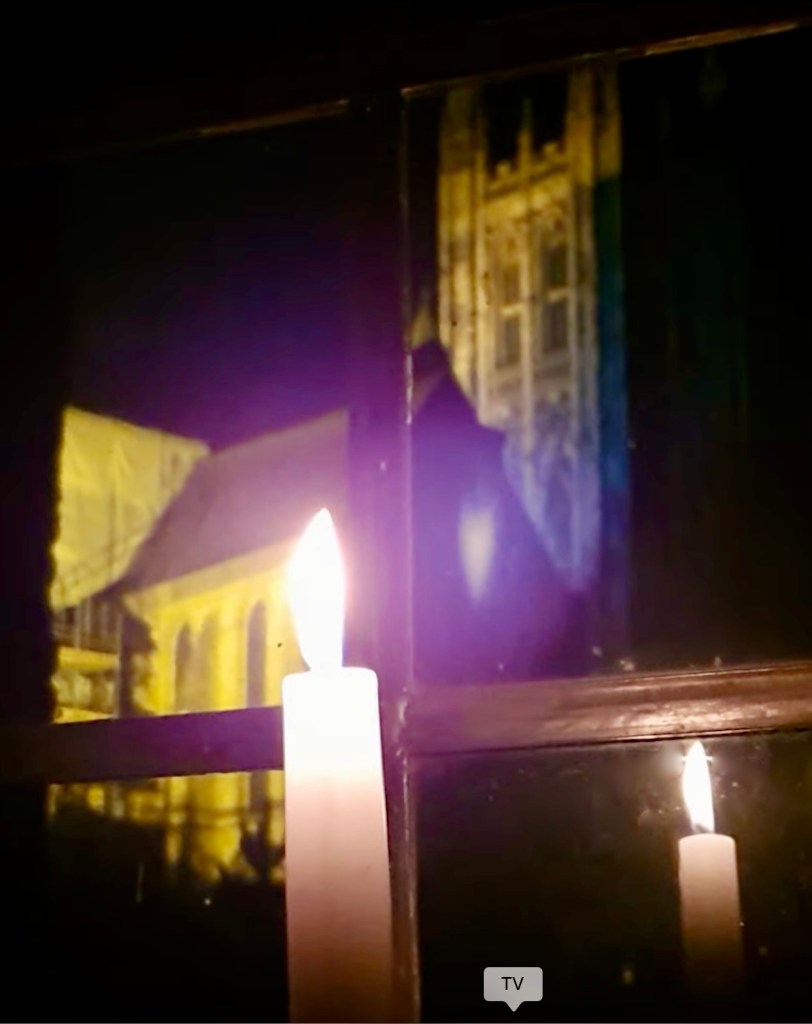
My memory of the event is hazy, happening so many years ago. I don’t remember where I parked my little purple moped—someplace along St. Aldate’s or Pembroke Street. I was probably excited and a little nervous as I took off my helmet and entered the doors to St. Aldate’s Church, a popular church with Oxford University students. My friend Dave, who previously had lived in Oxford, suggested that I really had to check it out. The building itself was a sooty old Gothic structure, the nave and chancel constructed in the 12th century and comprising the central part of the building as it now stands, although the building I entered had been extended as the church grew. I thrilled at the enthusiastic singing of old Anglican hymns by the full-throated voices of the mostly student congregation, accompanied masterfully by the musician on the bench of the old pipe organ. The order of service, prayers, and responses were found in a little, green, paper-back booklet in the pew rack.
Discovering liturgical worship was a revelation to me. It was here in this Anglican church that I first attempted prayer with others from a prayer book, marveling at the thoughtful, beautiful words expressing profound sentiments in words I never could have put together myself. Only then, as an adult in my late 20s, did I realize I could have a heartfelt conversation with God using someone else’s words.
Discovering and praying with others the beautiful words in the English prayer book at St. Aldate’s Church in Oxford made me take a fresh look at prayer, where I was frequently moved by the sentiments expressed in the little prayer book and the fact that I was collectively expressing those sentiments aloud with my brothers and sisters in Christ.
To this day I deeply love hearing the Prayer for Purity at the beginning of the Eucharist service (“to you all hearts are open, all desires known…”) and saying the thanksgiving at the end (“you have graciously accepted us as living members of your Son our Savior Jesus Christ…”).
It was in the Episcopal church, a few years later that I learned there were short prayer services for various times of the day. As a new Episcopalian at another popular student church in Tempe, Arizona, where I was doing graduate work, I was soon put to work as a lector, occasionally leading the service of Morning Prayer. I later learned about Noon Prayer, Evening Prayer, and Compline, the service meant to be said before you lay your head down at night. One of my very favorite prayers comes from this service: “Keep watch, dear Lord, with those who work and watch and weep this night…”. For most of the church’s history, Christians didn’t understand prayer as a means of self-expression or a personal conversation with the divine, but rather as a corporate way of approaching God through the Divine Office.[1]
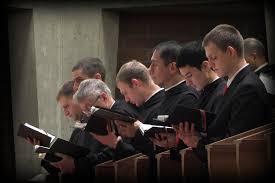
It was years later, during visits to the Monastery of Christ in the Desert in northern New Mexico, that I developed an appreciation for the Divine Office, psalms and prayers said seven times a day, in services that lasted from ten to forty-five minutes. I gamely roused myself at 3:45 in the morning to splash some water on my face, dress, and take the seven-minute brisk walk to the chapel, using my flashlight to see my way along the gravel road.
I learned some wonderful things by dwelling amongst the monks for several days. First, chanting the psalms is very effective in making certain phrases and verses stick in your head. I remember taking an afternoon hike to see more of the canyon, chanting “Answer me, O God, defender of my cause; You set me free when I am hard-pressed…” from a psalm we had chanted earlier in the day. Also, observing the Daily Office seven times a day was very conducive to being in a prayerful state of mind all day. Brother David Steindl-Rast[2] makes the distinction between “prayers” and “prayerfulness.” My experience at the monastery was that joining the monks in prayer several times a day led to an experience of heightened prayerfulness throughout the day. Through prayerfulness, every activity tends to become prayer.
[1] Tish Harrison Warren, Prayer in the Night. (Downers Grove, IL: InterVarsity Press, 2021), 8.
[2] David Steindl-Rast, Gratefulness, the Heart of Prayer (New York: Paulist Press), 1984.
If I’ve counted correctly, this is my sixth visit to the Monastery of Christ in the Desert, a Benedictine community in northern New Mexico. I really needed this trip. On the Mary and Martha scale, I’ve felt like I’ve gone too far down the Martha path in the last year and I need a little more of what Mary found at Jesus’ feet. In the spiritual life, it is good to interrupt old habits and routines. Michael Casey calls this the “grace of discontinuity.”
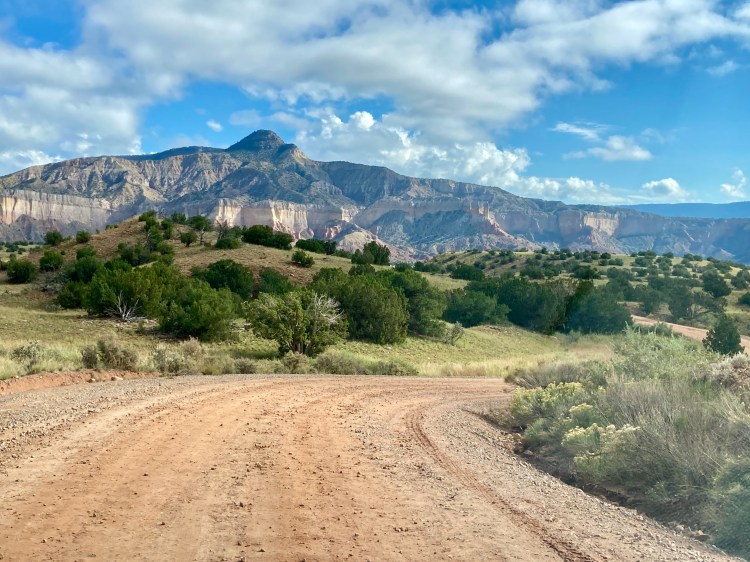
The forest service road to the monastery
I unwittingly planned my visit to coincide with Albuquerque’s annual hot air balloon festival. This meant that to rent a car I had to find one at an agency thirteen miles from the airport. And I was given the very last car in the lot, the car no one else was inclined to choose: a small and somewhat gutless economy car. I worried that it might not meet the challenge of the thirteen miles of dirt forest service road at the end of the trip. (One has to go through miles of national forest land to get to the monastery.)
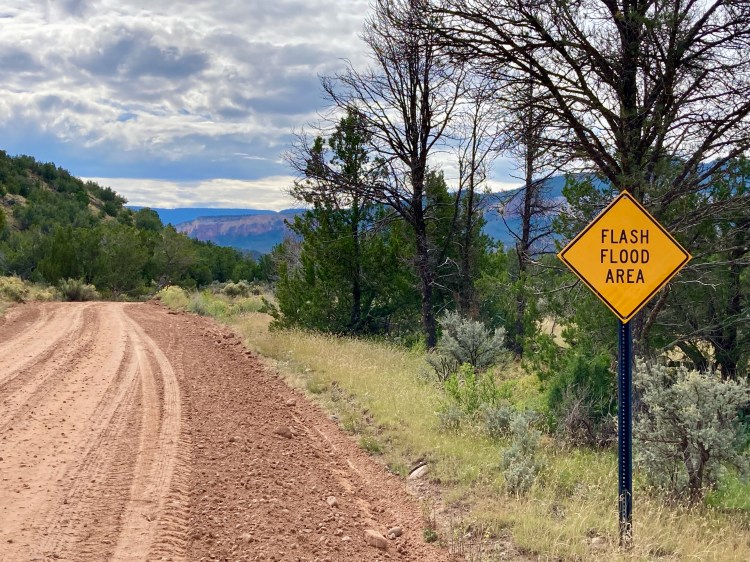
There were no balloons in the air today as I traveled north as it was a “yellow flag” day. The sky was overcast, and thundershowers were a possibility. The balloon riders and balloon followers must be disappointed. There was a substantial but brief shower as I drove between Albuquerque and Santa Fe, but there were also periods of warm sun. Highway 84 took me miles past Abiquiu to the forest service road that leads into the canyon. Occasional signs along the dirt road warned “flash flood area,” but the road was still intact. I didn’t dare stop in the occasional muddy spots for fear I wouldn’t get traction in my wimpy little car to take me through them and up the next incline. But I made it safely and arrived as the sun poured its warm rays throughout the canyon.
In my first three trips to the monastery, I found that I had to experience an unsettling adjustment period. I had to reprogram myself to not think about unreturned emails or people I should have called, accept the fact that there wasn’t anything I absolutely had to do, make peace with sharing a bathroom with a few other guests, and live in a room the size of a monk’s cell, about one third the size of the rooms in a Best Western. More importantly, this thoroughly indoctrinated Protestant boy had to make peace with the unfamiliar “Catholic-ness” of liturgy I would experience.
My room in the guest house
My first scheduled activity on this trip was a contemplative sit in the Church for a half hour during what the monks call “Exposition and Eucharistic Adoration.” The monks and guests sat contemplating the sacred host in a beautiful monstrance on the altar. I practiced centering prayer. Having participated in the services of the Divine Office before, I enjoyed again joining with the monks in chanting psalms during Vespers and Compline, although some of the chant tunes are a little tricky. St. Benedict instituted seven daily prayer services to be conducted throughout the day, which he referred to as the “Work of God” (or Opus Dei).
Taking the seven-minute walk from the guest house to the church for Compline, the last service of the day, my flashlight lighting the way, I noticed thunder in the distance. During the service we heard loud peals of thunder overhead, and the heavens open up, pouring down rain in buckets. The seven minute walk back after the service was sufficient to leave me thoroughly soaked by the time I opened the door to my room.
I suspect that I will still have to make some uncomfortable adjustments tomorrow. But if it’s like my other stays here, I know I have many blessings in store.
Day 2
I’ve been thinking back to my first visit to Christ in the Desert nine years ago. The trip started off with glitches at airport check-in and challenges finding my connecting flight in LA. After taking an unusually long time to acquire my rental car in Santa Fe, I headed north missing the turn-off to Interstate 84 in Española and ended up in Taos. I let the monastery guest master know that I would be arriving the next day and took a motel room there. While brushing my teeth, the sink started to gurgle and back up, the drain filling the sink with disgusting gray water with bits of green things floating in it. While I was on the phone with the front desk, the sink overflowed, spilling its disgusting contents onto the bathroom floor. After some persuasion, I convinced the desk clerk that she needed to give me another room.
St. Benedict icon
The first couple of days at the monastery, during that first trip, I found it hard to follow—let alone participate—in the unfamiliar chanted liturgies. I diligently went to all the seven daily offices. I thought Vigils was a great way to start the day, even if it started at the ungodly hour of 4 a.m. Lauds (5:30 a.m.), followed immediately with Eucharist, was a different matter. I found sitting through the hour and a half of solemn chanting difficult, especially before breakfast and coffee. I couldn’t help feeling out of place as others went forward for communion. (The Catholic Church’s policy about those who can receive communion was posted on their website and printed in the guest guide.)
At some point during my second day there, I recognized my resistance to the worship experience and the obstacle it presented to appreciating what I needed to learn in the days that would follow. I acknowledged to myself that the “Catholic-ness” of the monastery was rubbing up against my good evangelical Protestant upbringing and the subtle anti-Catholic bigotry that came with it. The veneration of the Virgin, praying to saints, the overly penitential tone of some of its liturgy was difficult for me, not to mention my awareness of Catholic teaching about same-sex relationships, contraception, and the role of women in the church. As the week went on, I let my resistance go, thinking to myself, There are reasons why I’m not a Roman Catholic, but I’m here to appreciate and gain as much as I can from this experience.
By the end of my time there, I fully appreciated how simplicity and silence have great value, removing the distractions in life and making room for other things in one’s consciousness and spirit. Observing the daily office seven times a day was very conducive to being in a prayerful state of mind all day. Esther DeWaal points out that mindfulness is what the monastic life teaches us, walking through life with my hands open, my eyes open, watching and listening “to God breaking in again and again on my daily life.”[1]
[1] DeWaal, E. (1989). Living with contradiction: An introduction to Benedictine spirituality. Harrisburg, PS: Morehouse, pp. 79-80.
Back to the present, the words that stood out to me in today’s mid-day service, or Sext:
V. O Lord, you love a heart that is true.
R. In my heart of hearts you teach me wisdom.
Day 3
Vigils was cancelled this morning, but I did get up in time for Lauds at 5:30 a.m. Very uncharacteristic of New Mexico in October, the dawn brought dark, overcast skies and a persistent drizzle. At 11, I met Abbot Christian in the church, where we had a nice long conversation about Portland and the Cornerstone community at Trinity.
He commended me on my book (Praying with Saint Benedict) and recommended someone I should contact who could endorse and promote the book. He then invited me to follow him to the cloisters, usually off-limits for guests. Inside the monks’ compound, in the breezeway to the cloisters, he showed me “the farm.” What used to be a grassy field was now divided into a place for chickens, a small orchard, a berry patch, and a field for their sheep. Abbot Christian also invited me to check out a couple of the rooms. The room for visiting monks was simply but beautifully decorated. I reminded him that I had been in the cloisters before, once to rake leaves in the central yard and once to help him clean a room and prepare it for a new brother that was coming to join their community.
Abbot Christian in his work clothes
My conversations with Abbot Christian have always been enjoyable, and I walked back to the guest house feeling greatly uplifted. However, he happened to mention in passing that a few travelers were unable to get to the monastery today because of the surface conditions on the forest service road. I’m now a little apprehensive about getting to Santa Fe on Friday. Prayers during Vespers always include a prayer for travelers. (God, are you listening?)
On the way back to the guest house after Compline tonight, the moon broke through the clouds. I hope that’s a sign of clearer skies tomorrow.
Day 4
Oh dear. At Lauds this morning, the canticle made reference to “flood waters.” I hope that’s not an omen. I tossed and turned in the wee hours of the morning, worried about the road and its flash flood areas and my ability to get out of here on Friday. However, the sun came through the clouds at daybreak and filled the canyon with warmth. The clouds are parting, and I’m hoping for the best.
I reported for work duty this morning after Terce. I have always enjoyed the work duties, because, in this place of silence and restraint of speech, it is always an opportunity to have an interesting conversation with a monk or another guest. I have gotten to know a few monks and met several very interesting guests from various parts of the country during these work assignments. This morning I met Don and Kathy from Nashville and enjoyed talking with them, and later, Frank from Chattanooga.
After the work session, I hiked about a mile (mile and a half?) up the road to see what condition it was in. Enough vehicles had been over it that the dirt, though still moist in places, seemed to be pretty hard-packed and firm. However, my heart just about jumped up to my throat while reading in the late afternoon. A dark cloud passed over and it started to sprinkle. Fortunately, the shower lasted only about fifteen minutes, but it again increased my anxiety of getting back to the highway safely. Words to one of the psalms we chanted tonight at Vespers were: “To you, Lord God, my eyes are turned: in you I take refuge; spare my soul!” My spiritual challenge today has been to trust God. We’ll see what happens tonight and tomorrow.
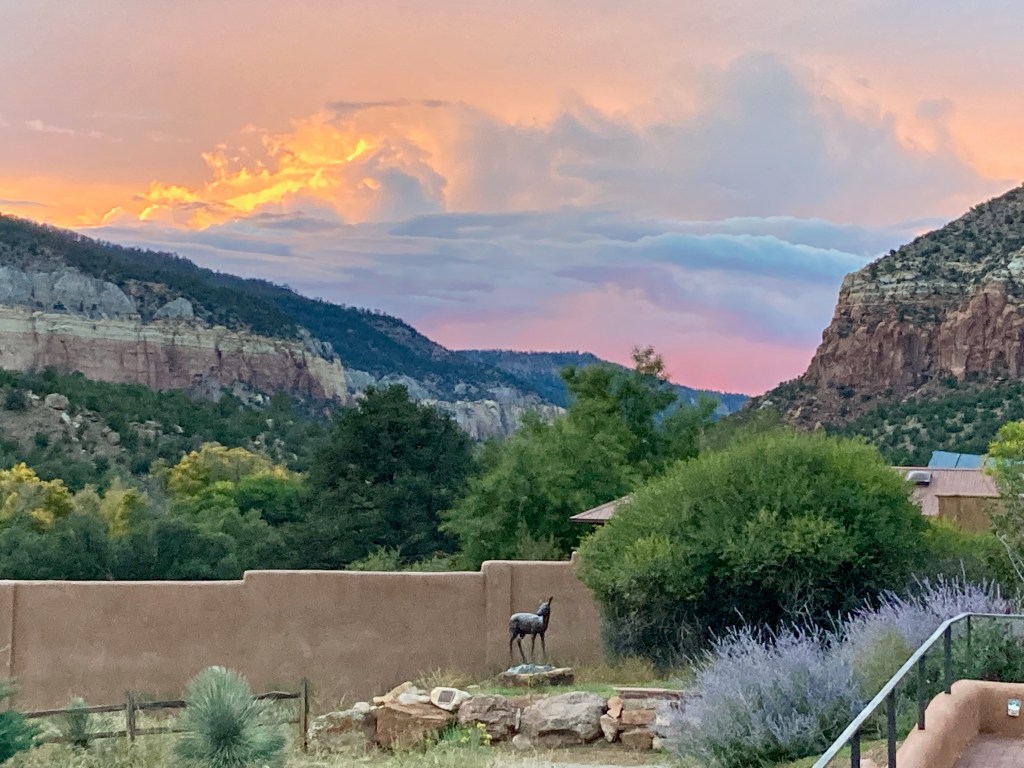
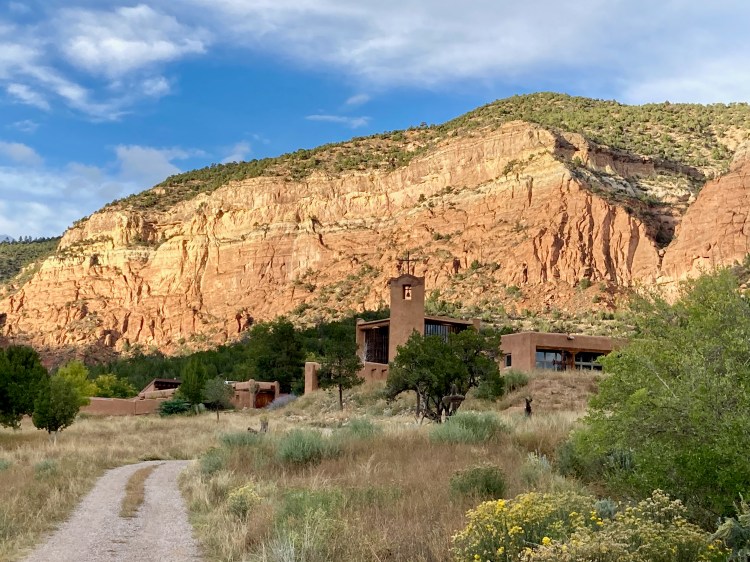
Tonight, walking back to my room after supper, the sun was low in the sky, spotlighting in rich hues the breathtaking canyon walls. I had to stop and just take it all in. How can you not sense God’s presence in the Chama Canyon? The cliffs, hundreds of feet high, create a spectacular temple. There is no question that this is a sacred place.
A doe and two fawns in the courtyard of the guest house cautiously turned to look at me as I came through the gate. It didn’t seem to bother them that I and another guest stopped to stare at them. When I went to the common room to fix myself a cup of tea, I happened upon Don and Kathy and Frank. Gathered in the little kitchen area, we struck up a long and interesting conversation about our religious upbringings, the Bible, and our current communities of faith. One of the blessings for me in coming here is meeting interesting people from other parts of the country and sharing faith stories.
Like many last day experiences I’ve had here, the beauty of the canyon and events of the evening made me emotional about leaving. When would I be back again? What part of my monastery experience will stay with me in the coming weeks and months?
I woke today anxiously checking the weather and thinking of my drive to Santa Fe, where I’d spend the night before returning the car to Albuquerque and catching my return flight to Portland. After breakfast, I picked up a little book I bought in the gift shop yesterday, All Will Be Well: 30 Days with Julian of Norwich. Since it was the 7th, I opened it to Day 7 and here’s what I read:
On one occasion, our good Lord told me:
every kind of thing will be all right.
He desires us to understand
that not only does he concern himself
with great and noble things,
but equally with small and simple things…
Julian of Norwich
After packing up my car and saying my good-byes, I said a little prayer before turning the ignition. The road wasn’t too bad. There were a couple of muddy places on narrow curves that made me a little nervous, but I successfully navigated them and breathed a sigh of relief when I reached the flat stretch that leads to the highway. Every kind of thing will be all right.













 Improbable Benedictine