On December 21, the Church celebrates the life of Saint Thomas the Apostle, who sometimes carries the unfortunate nickname of “Doubting Thomas.”

The Gospel of John tells the story. When Jesus had just explained that he was going away to prepare a heavenly home for his followers and that one day they would join him there, Thomas reacted by saying, “Lord, we don’t know where you are going. How can we know the way?” Jesus responded by saying to him, “I am the way and the truth and the life.”
Thomas was not present when the other disciples first saw Jesus after his resurrection. When he rejoined them, the other disciples told him, “We have seen the Lord.”
But Thomas said to them, “Unless I see the mark of the nails in his hands and put my finger in the mark of the nails and my hand in his side, I will not believe.”
A week later, Thomas was with his disciples again when, although the doors were shut, Jesus suddenly appeared among them, saying “Peace be with you.” Thomas still didn’t trust his senses. Then Jesus said to Thomas, “Put your finger here and see my hands. Reach out your hand and put it in my side. Do not doubt but believe.” Suddenly Thomas’s eyes were opened and he answered, “My Lord and my God!”
An honest appraisal of one’s beliefs makes room for doubt. Doubt is not unbelief; it is uncertain belief. In 1916 James Snowden defined it as “the borderland between knowledge and ignorance, the twilight between light and darkness.”[1]
He went on to say that not only is doubt not a hindrance to our thinking, but it is a highly useful factor in our knowledge and in life. “Doubt is the great destroyer of error, the scythe that mows down the weeds of baleful beliefs, the scavenger that removes the corpses of false hopes and dead faiths.”
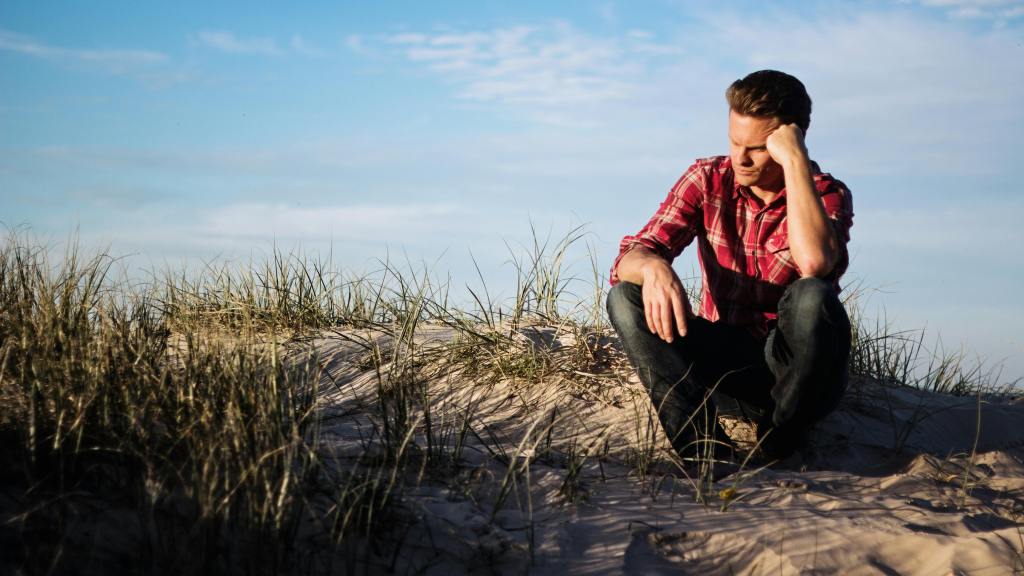
Scriptures are filled with examples of men and women challenging, questioning, and demanding answers from God. I didn’t come to a more mature, deeply held faith until I began to question and wrestle with teaching that didn’t make sense to me. Like the distraught father who brought his epileptic son to Jesus, I could say in my darkest times, “I believe; help my unbelief!” (Mark 9:24).

Tish Harrison Warren writes that sometimes trusting God feels to her like a steep climb. She writes: “Belief isn’t a feeling inside of us, but a reality outside of us into which we enter, and when we find our faith faltering, sometimes all we can do is fall on the faith of the saints. We believe together.” [2] According to traditional accounts of the Christians in the modern-day state of Kerala in South India, St. Thomas travelled there, outside the Roman Empire, to preach the Gospel, also travelling as far as Muziris and Kodungalloor (in Kerala State) in AD 52.
He is regarded as the patron saint of India. Many churches in the Middle East and southern Asia, besides India, also mention Apostle Thomas in their historical traditions as being the first evangelist to establish those churches.
According to Syrian Christian tradition, Thomas was killed with a spear at St. Thomas Mount in Chennai (Madras) on 3 July in AD 72, and his body was interred in Mylapore, India.
__________________________________
- James H. Snowden, “The Place of Doubt in Religious Belief.” The Biblical World, Vol. 47, No. 3 (Mar., 1916), 151-55, http://www.jstor.org/stable/3142911?seq=1#metadata_info_tab_contents
- Tish Harrison Warren, Prayer in the Night. (Downers Grove, IL: InterVarsity Press, 2021), 87.
 Improbable Benedictine