“Let the brethren serve one another, and let no one be excused from the kitchen service except by reason of sickness or occupation in some important work. For this service brings increase of reward and of charity” (RSB 35).

I just finished doing the dishes. I grew up having to take my turn washing dishes, a job I didn’t always enjoy. But the Rule of Benedict changed my attitude about tasks such as this. Our word minister comes from the Latin minister and the Old French menistre, which means servant, as in valet or one who serves tables. According to the Benedictine principle of ora et labora (prayer and work), physical labor done for the benefit of others is sacred too.
One salient memory of my visits to the monastery is seeing the monks serving each other and their guests during the midday meal, the largest meal of the day. The servers wore aprons and special sleeves that protected the cuffs of their cassocks as they brought trays and bowls of food to each table, allowing each person to take as much as they needed, and giving a slight bow of their head at the end of their silent interaction. As the monks and guests ate in silence, the servers cheerfully went about their tasks as if they truly enjoyed their duty. I learned that other monks were assisting the cook in the kitchen.
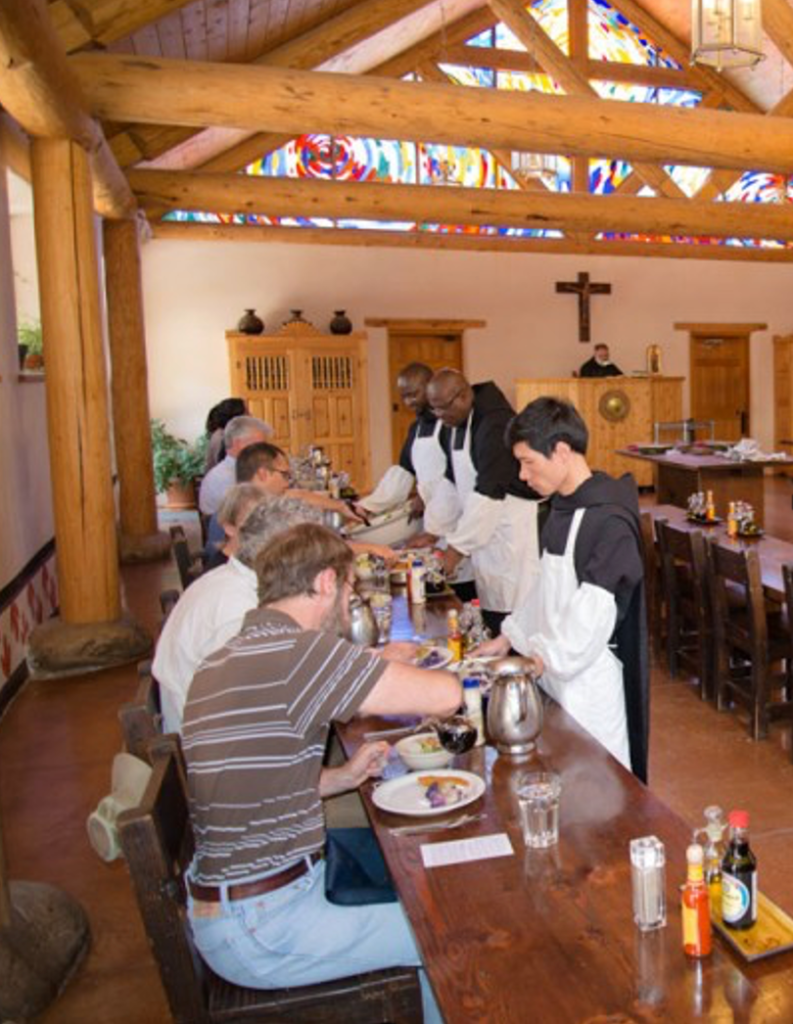

At the end of one meal, I was especially impressed that the abbot himself rose, leaving the abbot’s table, and joined others who were clearing away the dishes and table service. In this simple act of service, the monks were following Christ’s own example. Jesus himself, the very Son of God, humbled himself and became a servant, feeding his disciples and washing their feet.
 Improbable Benedictine